Hierarchy, Ascent, and the Inversion of Meaning
The State of Man in the Age of AI & at the Threshold of Hierarchical Ascent

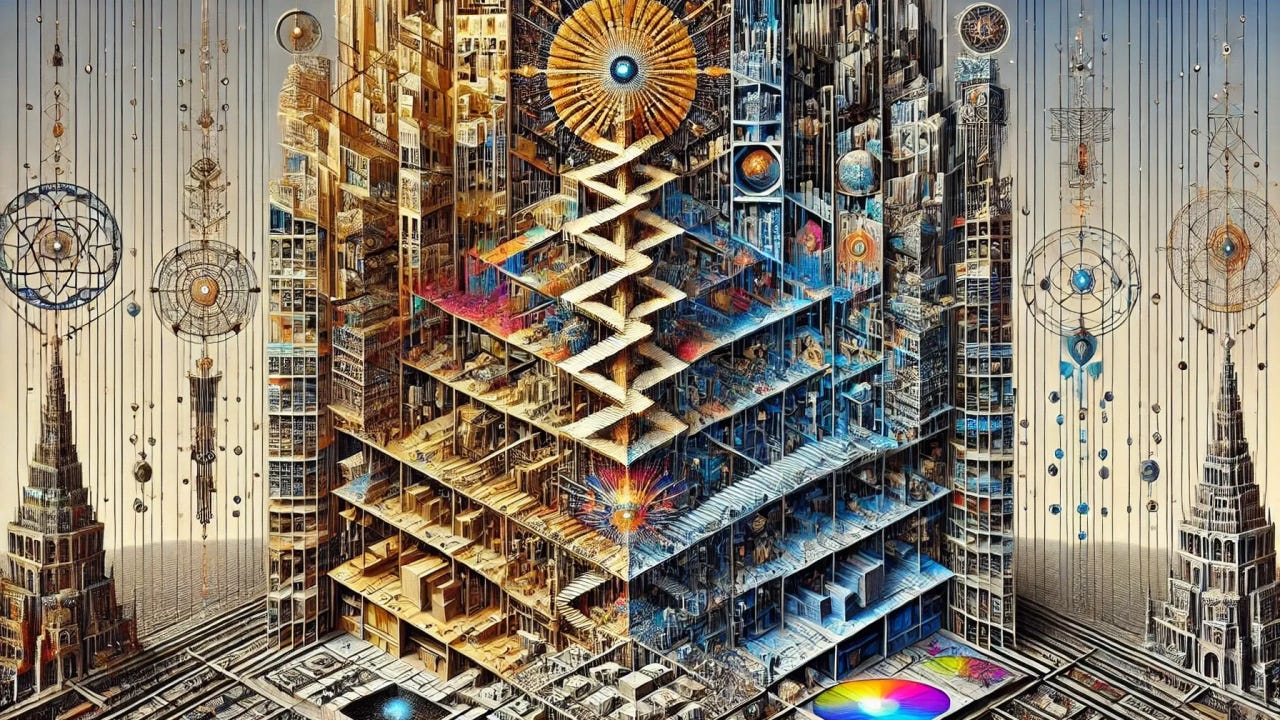
“As, therefore, reasoning is to understanding; as that which becomes is to that which is; as time is to eternity; as the circumference is to the center: so is the changing course of Fate to the immovable directness of Providence.”— Boethius, The Consolation of Philosophy, Book IV, Prose 6
The tension between order and movement, hierarchy and interplay, harmony and dissonance is embedded into the very fabric of our existence.
Boethius, writing from the solitude of his prison cell, articulated a vision of reality in which the lower is not negated but perfected by its relationship to the higher—reason’s striving toward understanding, time’s longing for eternity, and the changing course of Fate held steady by the unshaken hand of Providence. From the human perspective, Fate appears fragmented, chaotic, and contingent, yet from the standpoint of eternity, it is seen as Providence, cohering in a perfect and necessary order.
Boethius reveals that what appears as disorder in chronological time is, from the perspective of eternity, part of a hidden but necessary kairological order. Yet man does not merely suffer passively within this order—he participates in it.
In my prior essay, I explored kairology and the self-binding nature of man—how he does not exist in time as a passive subject but as an active participant, binding himself to structures of meaning, obligation, and destiny. This binding is not neutral: it either directs him eschatologically toward communion with eternal being or toward his ultimate privation.
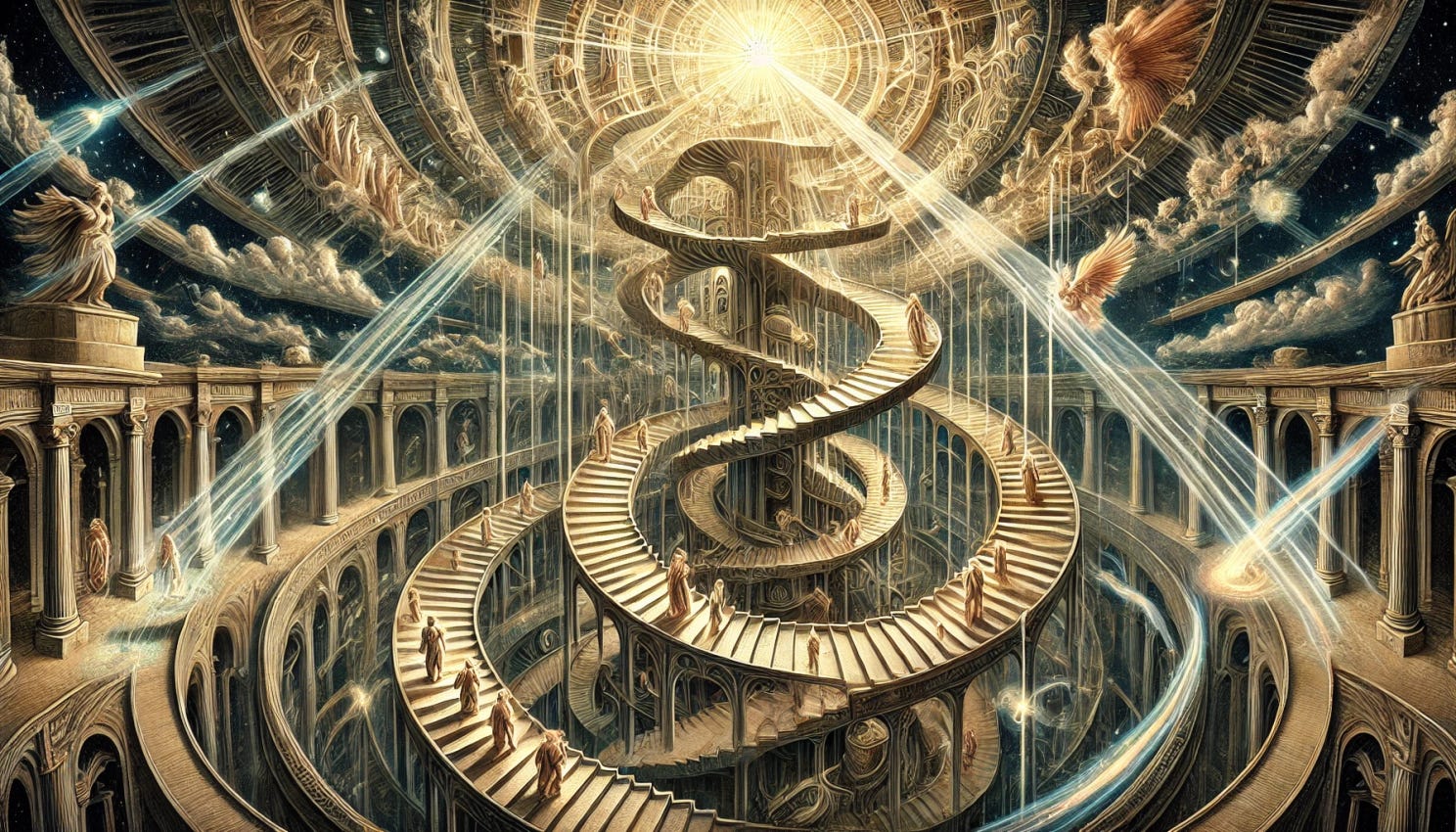
The structure of time is not simply an indifferent succession of moments but a hierarchy of participation, where lower realities stretch toward their perfection in the higher.
To exist within time is to experience dissonance. To glimpse eternity is to perceive harmony.
Yet these two experiences—temporal disorder and eternal resolution—do not exist in opposition but in hierarchical relationality within space. Man is suspended between the circumference and the center, between the contingencies of Fate and the sovereign will of Providence, between the motion of history and the stillness of eternity.

This is not a passive suspension but a state of presentiality—a uniquely human faculty by which we simultaneously inhabit temporal flux and grasp something beyond time in moments of illumination. Augustine, in Confessions, describes this as the distension of the soul—stretched between memory, present action, and future anticipation.
This presentiality allows man to bind himself to higher realities, moving toward meaning rather than remaining adrift in the abyss of becoming, where motion is severed from fulfillment, where all is flux but nothing arrives.
Yet if man rejects not only ascent but motion itself—if he refuses even to seek—he falls not into endless becoming but into the abyss of duration, a paralysis of meaning where time no longer unfolds but collapses into a frozen recursion of itself. What begins as restless motion without telos ends as a stasis without transcendence—where time does not progress toward fulfillment but merely encloses man within a perpetual present cut off from eternity.
Thus, the human condition is defined within time by hierarchical dualities—they should not be perceived as a contest between lower and higher, but as an ordered ascent where both find their perfection. The lower is asymmetrically perfected by the higher rather than negated by it.
The temporal finds its fulfillment in the eternal, reason is consummated in understanding, and the apparent disorder of history resolves into an unseen but perfect harmony.
Meaning itself is neither static nor endlessly deferred; it is emergent—an ascent from discord toward consonance for those willing to be formed by it. Not as slaves to blind necessity, nor as captives of futile motion, but as asymmetrical participants in reality.
From Cosmic to Practical: Asymmetry in the World of Man
“Give what belongs to Caesar to Caesar, and give to God what belongs to God” (Matthew 22:21)
Christ’s words are not merely a clever evasion of political entrapment but a revelation of the asymmetry between temporal power and eternal sovereignty.
Yet the asymmetry between earthly dominion and divine sovereignty is not merely structural—due to the error of man, it has become a battleground. For when man ceases to see temporal power as contingent upon the eternal, he no longer accepts it as a passing order within time; he seeks to extend himself through it, inscribing his own presence into history as a substitute for the divine.
The coin bears Caesar’s image, yet man bears the image of God (imago Dei).
One is stamped into dust—into metal that will fade, rust, and pass through countless hands. The other is engraved in light, an eternal seal upon the soul, meant for more than circulation.
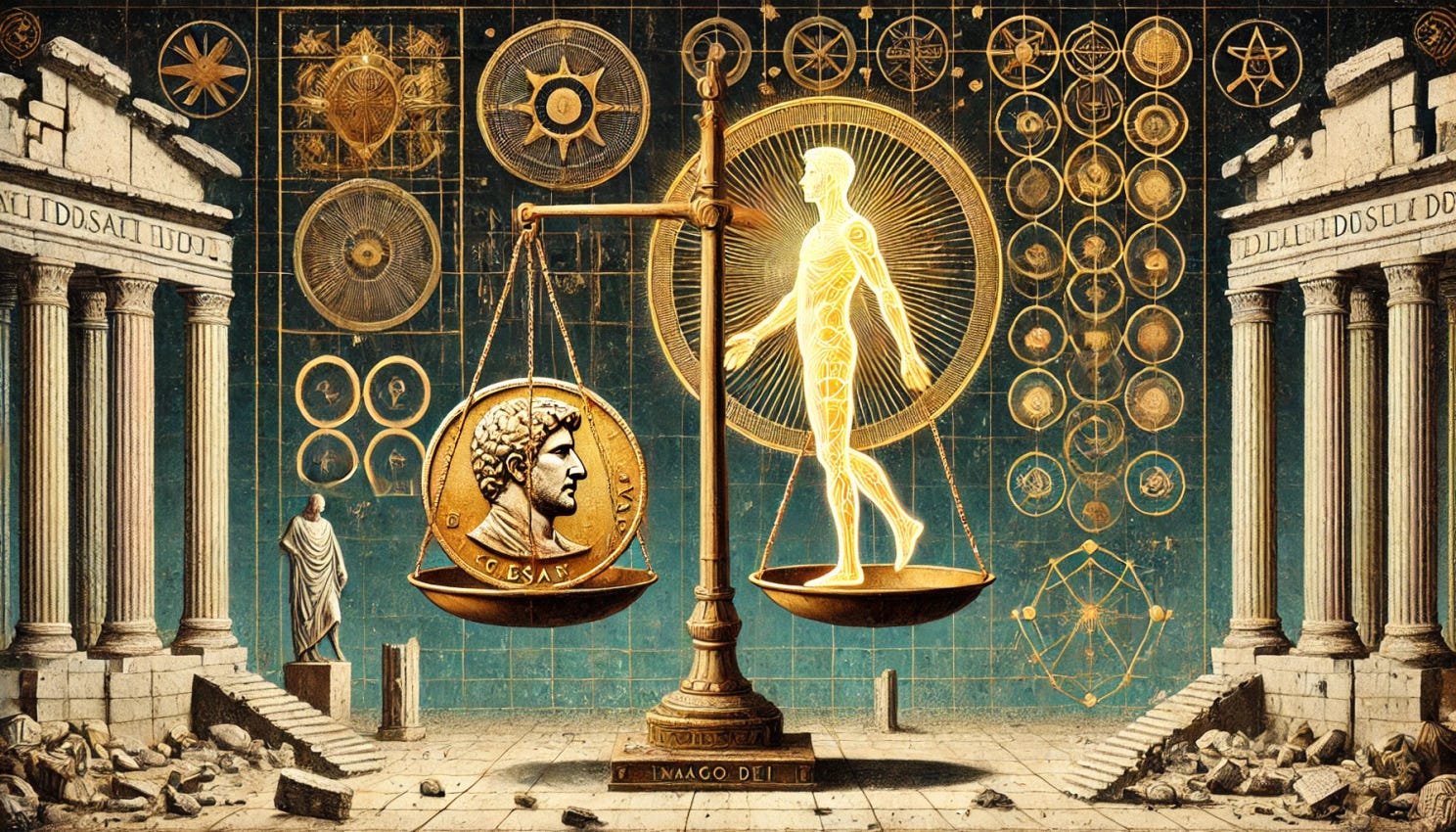
The authority of Caesar is neither self-sufficient nor ultimate; it is contingent, a transactional authority existing within time and fading with it, while divine sovereignty stands outside of time, drawing all things toward their fulfillment.
The asymmetry is clear: earthly dominion is a lower order of governance, bound in temporal hierarchy, which is subordinated to a higher order of divine sovereignty.
But if hierarchical asymmetry is the structure of reality, then what happens when man, rather than ascending within it, attempts to inscribe himself into it—seeking not participation in the eternal, but permanence within the temporal?
The result is not a mere extension of governance but the idolatry of self-extension through time—the worship of the extended image of mankind over the eternal presence of God, elevating bondage to the material over participation in the transcendent.
Man’s Image Extended in Time: The Idolatry of Objects
“The idols of the nations are silver and gold, gods fashioned by human hands. They have mouths, and yet are silent; they have eyes, and yet are sightless; they have ears, yet do not hear, never a breath have they in their mouths. Those who make them become like them, such is the reward of all who trust them.” (Psalm 135:15-18)
A coin is not merely a medium of exchange—it is a vessel of historical presence, an extension of the ruler into time beyond himself. In this way, it is an imprinted icon of human idolatry, a way for man to exist beyond his temporality by seizing a position within history.
But what is Caesar’s authority? It is not self-sufficient, nor ultimate, but contingent and transactional. Its very existence is a hierarchical concession—a granting of rule within time, destined to fade as all earthly power fades.
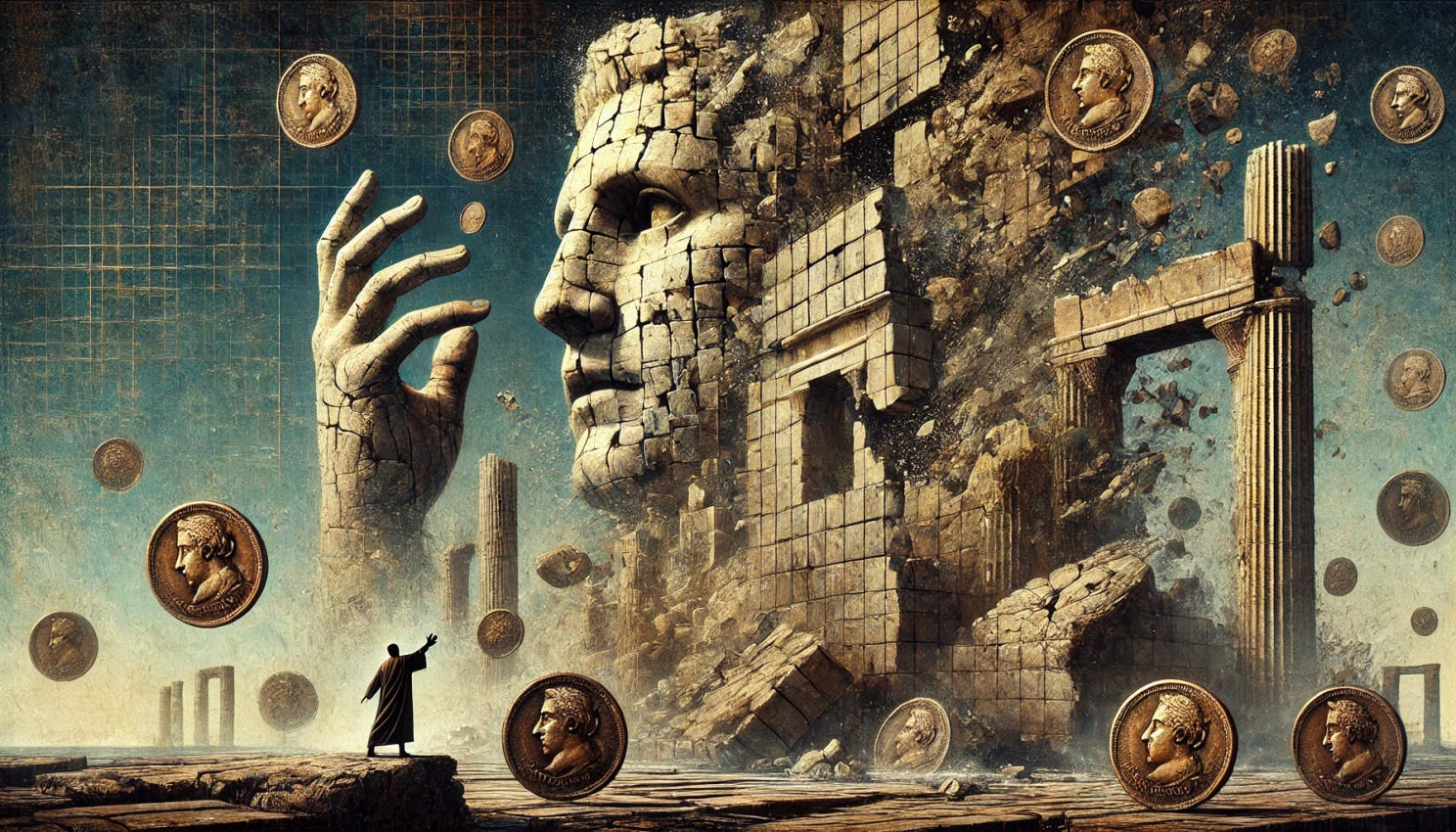
Yet, man attempts to prolong himself through objects, monuments, inscriptions, and symbols, seeking to stretch his finite grasp across infinite time.
This is the same idolatry that erected statues of kings, minted their faces on coins, and cast their images into metal and stone—not just to exercise power but to outlive finitude.
If Caesar is gone, but his image remains, then in what sense does power persist?
Echoes of Dominion: The Image Outlives the Man
Augustine saw that a ruler’s authority was never self-sufficient—it was always subordinate to the divine order. Aquinas refined this, arguing that just governance depends on natural law. But neither fully explored how power, once established, does not merely disappear.
Power lingers beyond the ruler, shaping the world long after his dominion has ended.
Caesar did not reign after death because he willed it from beyond the grave but because his image lingered on in the hands of men.
This is the hidden ground of social order:
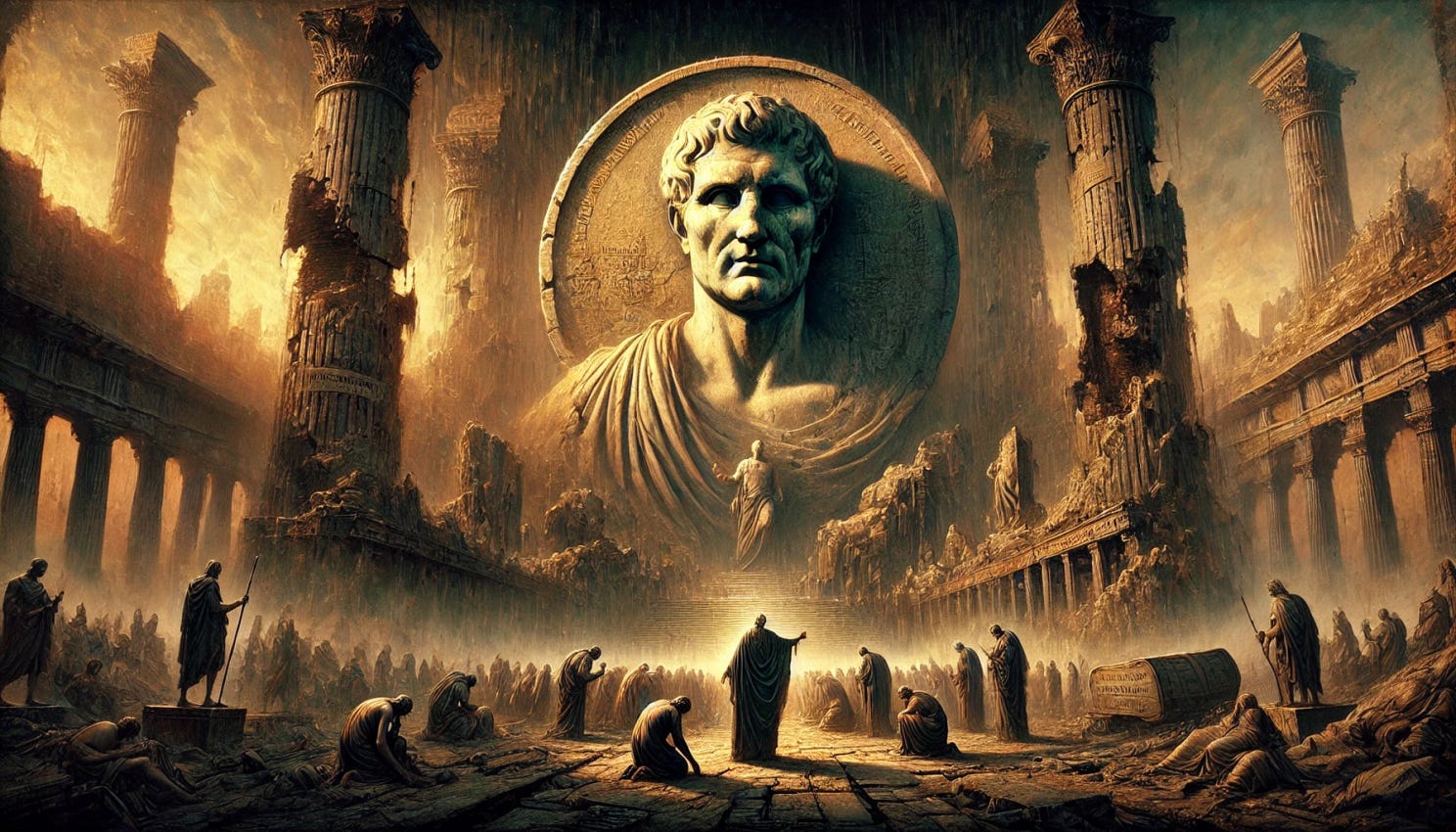
A ruler dies, yet his image remains—in currency, in laws, and in the structures built under his dominion. His name remains in the minds of men who come after him.
A conqueror perishes, but his name is carved in the monuments left behind, compelling later generations to serve his memory.
A lawgiver is buried, yet his laws persist, shaping lives long after his authority has faded.
Man does not merely serve other men—he binds himself asymmetrically to their extended presence in time, to their structural memory, to their lingering imprint upon civilization. However, this asymmetry is not a mere artifact of history; it is the very mechanism by which social order is sustained.
For the presence of the past does not simply weigh upon man—it governs him.
A structure, once established, does not vanish—it mutates into ritual, into law, into an image of authority severed from its source. It does not command by force but by participation, drawing the living into the patterns of the dead. The past is no longer a foundation but a shrine. Men do not simply inherit its order—they go as far as to worship its remains.
Practical Asymmetry
The foundation of all social order is asymmetrical participation—whether in relation to other men or in relation to something higher.
Hierarchy is often mischaracterized as mere dominance as if rule exists only for the imposition of power. But hierarchy, in its proper form, is not about coercion—it is about participation. It is a structure by which the lower is perfected in relation to the higher without being negated.
The ruled do not merely submit to the ruler; they participate in the enduring architecture of his governance, which extends beyond his mortality.
But this structure is not confined to governance alone—it is the architecture of reality itself.
Practical asymmetry is not about domination but about telos—the movement of all things toward their fulfillment. Just as time strains toward eternity, human structures reflect an ordered ascent toward higher realities.
Every act of measurement, every structure, and every form of meaning depends on ordered asymmetrical relationality. Without it, order collapses, distinctions dissolve, and nothing can relate to anything greater beyond itself.
Asymmetry is not imbalance; it is the very condition of meaning itself—the order through which the lesser ascends into the greater without dissolution.
A foot is greater than an inch, but an inch is necessary for the foot to be measured. A yard is greater than a foot, but a foot is necessary for the yard to be measured. The lesser does not negate the greater; it is ordered within it. Participating in the asymmetrical order of measurement, man transforms inches into feet, feet into miles—and the asymmetry of measurement into civilization itself.

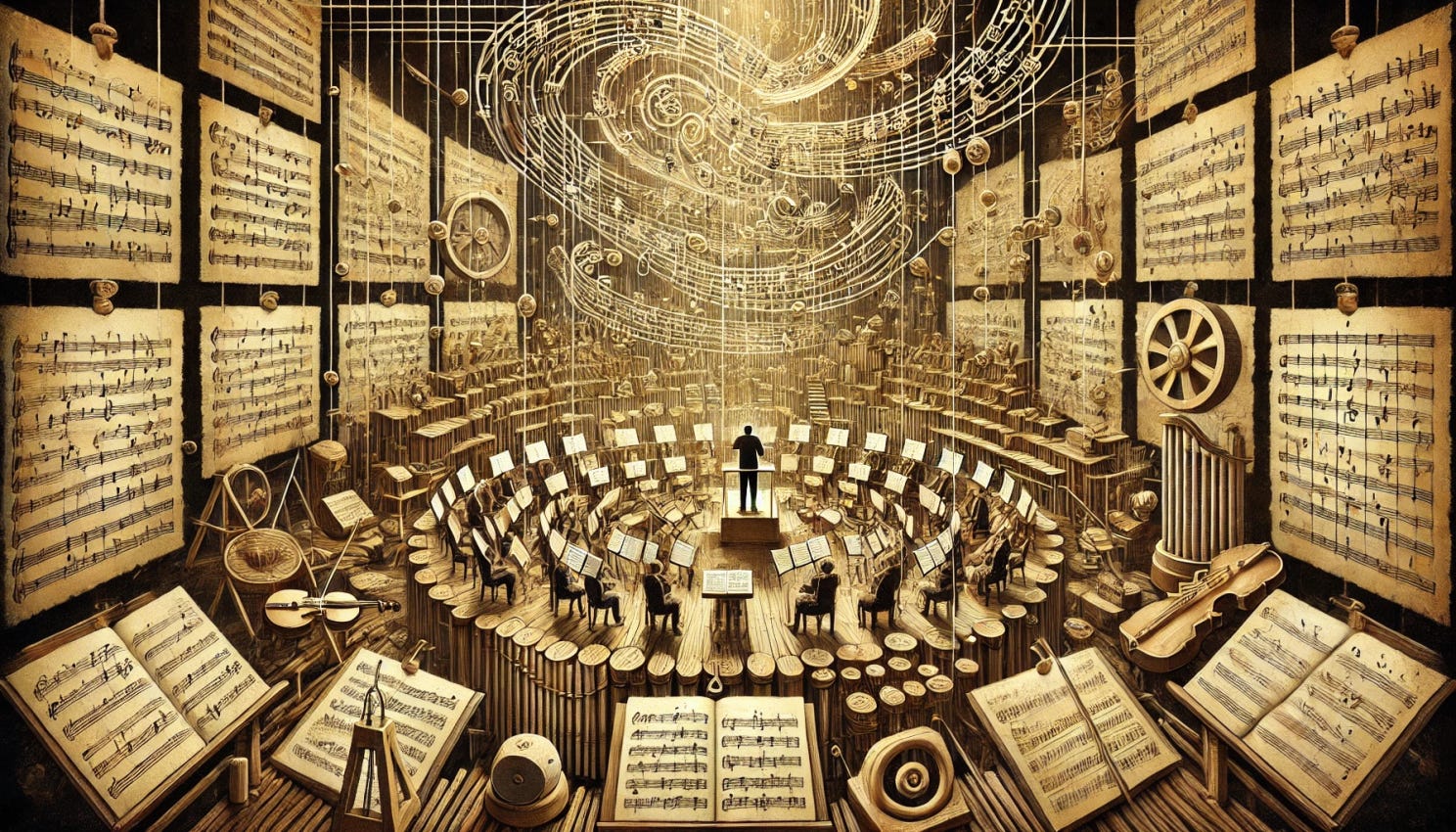
The world of music, like measurement, exists within a hierarchical order—where each level is ordered toward the next to achieve a coherent meaning. A note must give way to the chord, a chord to the progression, a progression to the movement, and the movement to the symphony. Without this ascent, music remains fragmented, unable to resolve into harmony.
A letter is ordered toward the word, a word toward the sentence, a sentence toward the paragraph, a paragraph toward the book—yet a book itself is meaningless without its smallest parts. The world of literature exists only through this ordered ascent, where the lesser does not disappear but, in submission to higher principles, finds its place in the greater whole.

A single act of virtue does not encapsulate the fullness of a virtuous life, yet a virtuous life cannot exist apart from individual acts of virtue. A moment of patience is ordered toward the habit of temperance, yet without patience, temperance is impossible. An act of justice is lesser than the formation of a just character, yet without just acts, justice itself is empty. The world of virtue, like language and measurement, exists in hierarchical ascent—where each moral decision, however small, integrates man’s participation into a greater order, ultimately shaping the architecture of his soul.
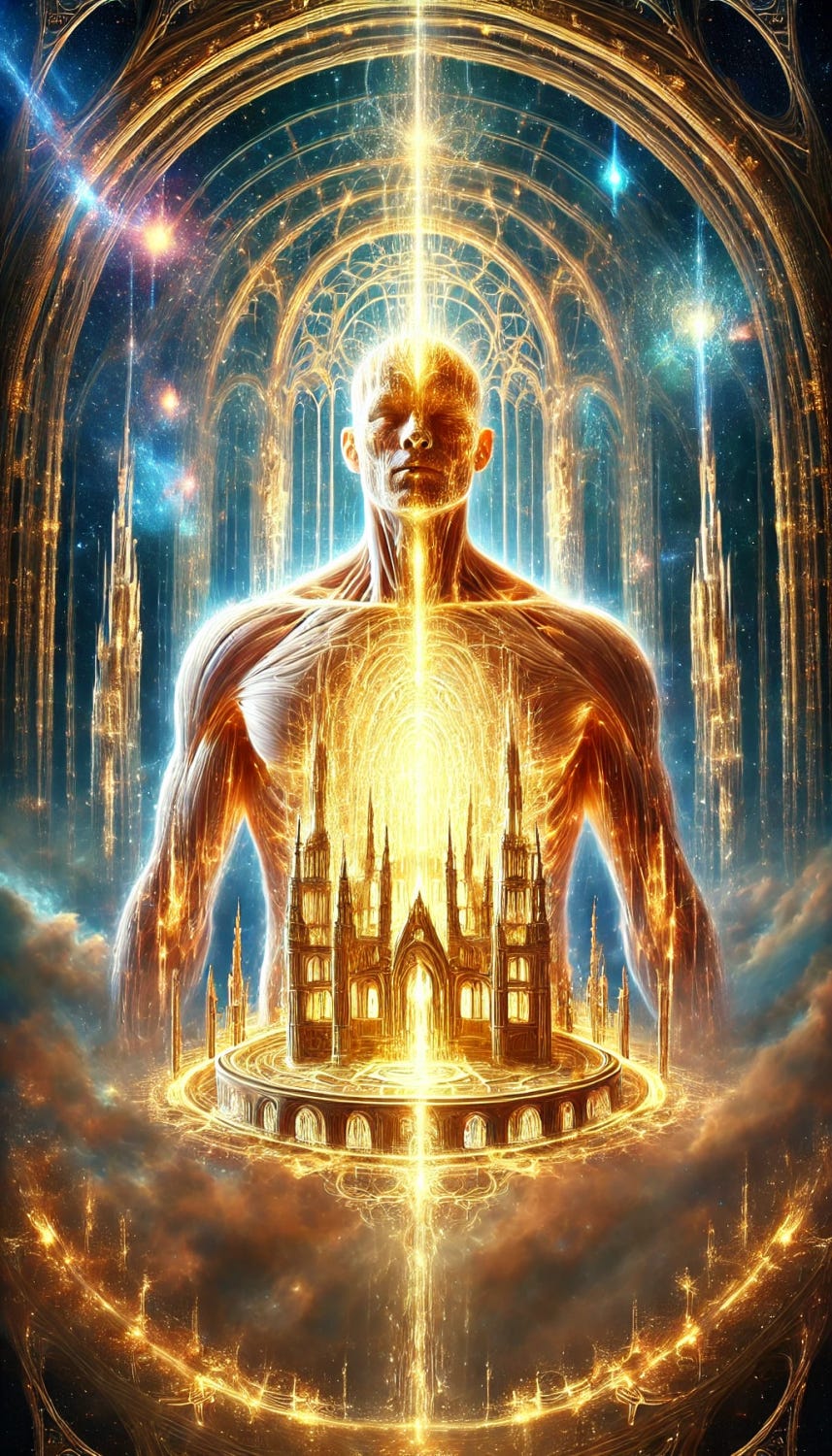
In all things, the lower serves the higher, but the higher perfects the lower.
To be an inch is not to be in rebellion against a foot— it receives its very meaning from participation in something greater.
Thus, we do not exist as isolated agents—we inherit the structures shaped by those who came before us. Some legacies are explicit, sealed in objects, laws, and monuments; others are implicit, embedded within the very fabric of our systems and assumptions. Even when unseen, these inheritances govern us.
However, inheritance is not passive reception; it is active participation. We do not merely receive the asymmetrical frameworks by which past men ordered governance—we sustain them, transform them, and, in turn, pass them forward. The temporal limitations that bound those before us now shape our choices, just as our choices will shape those yet to come.
Asymmetry is not confined to governance—it is the structure of meaning itself. It is found in poetry, mathematics, art, nature, and the very architecture of reality.
Nothing is meaningful in isolation. Meaning emerges only through ordered relation to a greater whole, where the lesser is perfected in the higher.
Man, too, is not self-sufficient in meaning. He is not an autonomous will but a being shaped, defined, and fulfilled in relation to what transcends him.
We are not ruled only by the living but by the enduring presence of the dead—the world we inhabit is structured by inheritance, and we move forward within the architecture of the past.
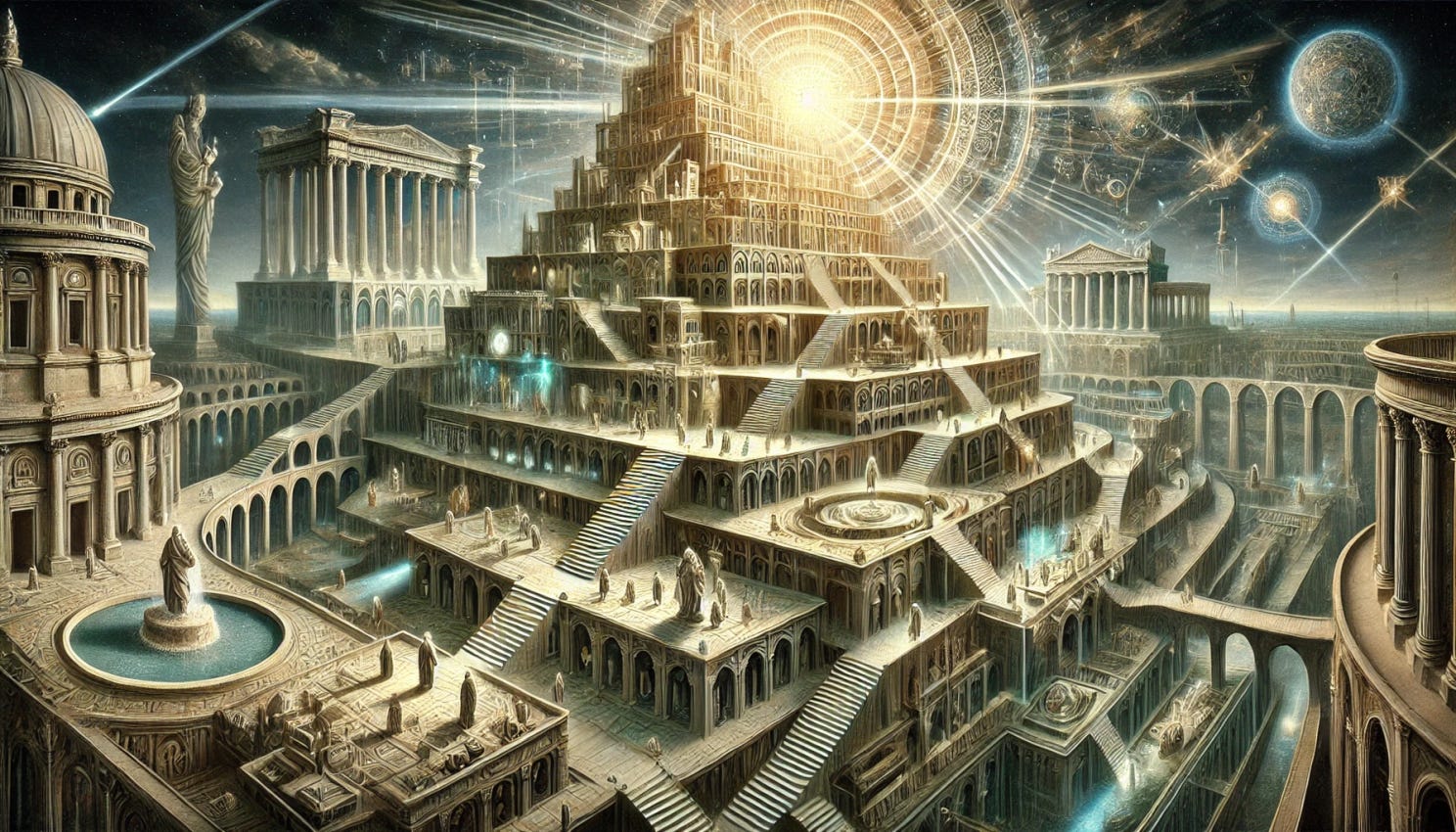
Multivariate Dimensions of Inheritance
The architecture of Inheritance is not a simple linear transmission from past to present but a complex interplay of multiple forces—historical, cultural, linguistic, metaphysical, and institutional—that shape human existence in layered, asymmetric, and interactive ways.
Historical Inheritance (Material & Institutional)
Governance, law, social structures, and technology persist across generations, developing while retaining the intelligible order of their origins.
Example: Roman legal principles still underpin modern jurisprudence, even in legal systems vastly different from their source.
Cultural & Linguistic Inheritance
Language is both received and developed, an active inheritance where words and their meanings unfold through time according to their nature and use.
Example: A phrase like “justice” carries layered connotations from Platonic, Aristotelian, Scholastic, and modern interpretations, all of which shape contemporary legal and moral thought.
Metaphysical & Theological Inheritance
Foundational cosmologies, religious structures, and ethical frameworks inform and order our understanding of reality.
Example: Christianity does not erase Jewish eschatology but transfigures it, demonstrating how inheritance is often fulfilled or reinterpreted rather than discarded.
Symbolic & Iconographic Inheritance
Symbols and visual structures persist across civilizations, retaining their formal principles even as their particular meanings undergo historical development.
Example: The halo in Christian art descends from earlier Greco-Roman depictions of divinity but is recontextualized within an entirely different metaphysical system.
Personal & Psychological Inheritance
Beyond collective inheritance, individuals receive the imprint of their lineage through inherited dispositions—familial narratives, psychological tendencies, and moral intuitions—shaped by both nature and habit.
Example: A child raised in a Stoic vs. Romantic intellectual tradition will inherit different reflexes of thought and emotional responses, even if they later reject them.

Given that inheritance is multivariate, it follows that it is also participatory—not a static transmission, but a dynamic reality in which multiple layers coexist asymmetrically, interdependently, and non-deterministically. Though some receive it passively, inheritance by its very nature invites engagement.
Asymmetrically: Not all inherited elements hold equal weight at any given time. Some structures endure, others fade, and still others undergo transfiguration.
Interdependently: Institutional, cultural, and theological inheritances do not exist in isolation—they reinforce, refine, or reinterpret one another across time.
Non-Deterministically: Inheritance does not impose necessity but conditions the field of possibility, shaping the range of choices available to man.
Thus, man is neither a passive recipient nor an autonomous creator. Man does not stand apart from inheritance, nor is he bound by it as mere fate. He is a co-creator, tasked not with rejecting what he receives but with ordering it toward its proper fulfillment. His freedom is not the illusion of detachment, but the responsibility of participation.
To deny inheritance is not to escape it—it is merely to be ruled by it unconsciously. Whether acknowledged or ignored, inheritance structures the very conditions of meaning.
Thus, engagement demands a choice: Order what has been given toward its rightful end or allow meaning to dissolve under the weight of neglect.

The Implications of Asymmetrical Hierarchy
Since reality itself is structured asymmetrically, so too is human life.
Yet the modern world resists hierarchy, seeking to flatten all distinctions. To do so is not to establish justice, but to deny the nature of being itself—for asymmetry is not an arbitrary imposition, but an ontological necessity, the condition by which meaning is discernible.
To reject hierarchy in governance is like insisting there is no difference between a foot and an inch—obliterating the very measurements by which order is established.
To reject hierarchy in knowledge is like claiming a single word is equal to an entire book—refusing to acknowledge that comprehension unfolds in degrees of depth.
To reject hierarchy in morality is like saying one act of kindness is identical to a lifetime of virtue—collapsing the distinction between gesture and formation, moment and character.
To flatten hierarchy is to flatten meaning itself.
The world cannot remain in neutral suspension. A reality without hierarchy is not a reality of balance—it is a reality on the verge of collapse, falling into one of two abysses:
The Abyss of Becoming – If hierarchy is flattened, distinctions dissolve, and meaning is endlessly deferred. This is the abyss of ceaseless motion without resolution, where nothing achieves fulfillment, and all is in flux.
The Abyss of Duration – If hierarchy is not merely rejected but inverted, meaning collapses into a parody of itself, where falsehood wears the mask of permanence. Here, time is no longer drawn toward eternity but coils inward, collapsing into a closed circuit of repetition.
Thus, the choice was never between hierarchy and equality, for equality alone cannot sustain meaning.
The true choice is between hierarchy and collapse—between the ordered ascent of reality, aligned with the ontology of time, and the chaos of its rejection.
Non-Serviam: The Rebellion That Reverses Order
What happens when hierarchy is not merely mindlessly flattened but known and rejected?
Hell is not an absence of order but its collapse into pure self-reference—where will, intellect, and being fragment, severed from the hierarchy that perfects them, and thus, from the very meaning of being itself. It is not simply the loss of sacred time and divine order, but the absolute rejection of all inheritance.
This rejection does not reduce reality to formless chaos—it produces an inverted structure, a counterfeit hierarchy sustained not through ascent, but through the perpetual recursion of distorted falsehoods. It does not abolish order; it feeds upon its remnants, twisting them into a system that sustains itself only through negation. The Devil does not unmake the cosmos; he perverts its foundation, turning every act of participation into an act of rebellion.
This is the fate of Satan in Paradise Lost.
His declaration of sovereignty, “Better to reign in Hell than serve in Heaven,” is not an act of liberation but self-imposed imprisonment. By severing himself from eternity, he does not achieve freedom—he creates his own pseudo-eternity, an unending cycle of perverse acceleration toward non-resolution, all the while declaring that he is ascending.
“I will ascend above the heights of the clouds; I will make myself like the Most High.” (Isaiah 14:14)
Benedict XVI warned that the modern world no longer recognizes the asymmetry between divine and temporal authority, leaving it vulnerable to either relativism or tyranny. But this failure is not an isolated error—it follows a trajectory.
The first stage of rejecting hierarchy is flattening. Distinctions are blurred, meaning is diluted, and structures that once pointed toward the higher are eroded. But a world cannot remain in neutral suspension; inversion follows as an inexorable correction.
When hierarchy is flattened, a vacuum is created—one that demands to be filled. Flattening, when pushed to its extreme, leads to inversion—the active reversal of perception regarding hierarchy. The lowest is exalted, the highest is condemned, and order is veiled with anti-order.
Let us return to our previous examples, tracing the path from flattening into inversion—not merely the erasure of distinctions, but the inversion of their meaning.
There should be hierarchy in governance, but we exalt the inch over the foot—because measurement itself is declared an instrument of oppression.
There should be hierarchy in knowledge, but we exalt the single word over the book—because structure is condemned as an instrument of control.
There should be a hierarchy in morality, but we say an act of violence is greater than a lifetime of virtue—because virtue, by its nature, is exclusionary.
Flattening is to say a scribble on a napkin is equal to the Sistine Chapel.
Inversion is to say a madman’s scribbles are superior because beauty is elitist.
A society that merely flattens hierarchy stagnates—it dissolves into mediocrity, but it does not necessarily become malevolent.
However, a society that inverts hierarchy actively makes war against order itself.
In a flattened world, governance is abandoned.
In an inverted world, the worst men rule.
In a flattened world, morality dissolves into subjectivity.
In an inverted world, transgression is law, and virtue is scorned.
Inversion is not chaos, nor arbitrary—it is structured anti-hierarchy, a perverse chiasm where every opportunity toward ascent is rewritten as descent.
Rebellion against hierarchy is not mere defiance—it is an eschatological act. It cannot stop at rejection; it must reconstitute itself as a rival theosis, a counterfeit eternity.
And so, the inversionist must declare:
I will not serve. I will make myself like the Most High.
The Science of Inversion
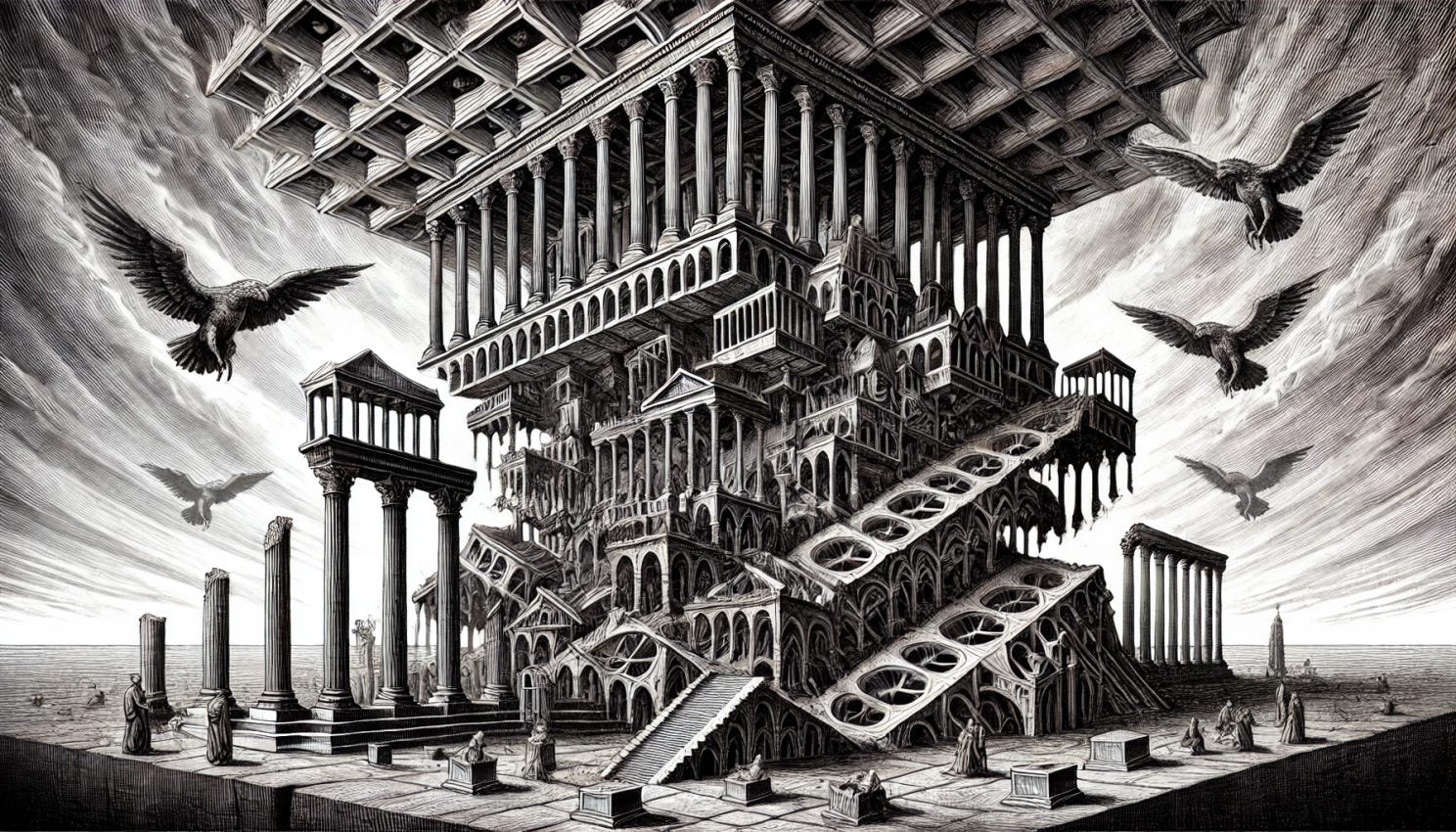
Chiasmus, a mirrored structure found throughout Sacred Scripture, unfolds in patterned ascent (A-B-C-C’-B’-A’), often leading to a central climax of meaning. This symmetry is not merely literary but ontological—reflecting the deeper metaphysical principle that hierarchy, properly ordered, leads to ascent. But when inverted the same structure does not return to neutrality—it follows a precise degenerative trajectory.
Just as hierarchy must be actively upheld through participation to sustain meaning, its rejection does not result in mere dissolution—it follows its own structured path toward collapse. This is anti-hierarchy: a counterfeit order that mirrors the structure of truth while accelerating into disintegration.
In Euclidean geometry, inversion is not arbitrary destruction—it is a calculated transformation, where the original form is mapped into its distorted counterpart. Likewise, inversion does not abolish hierarchy outright; it hollows out meaning while retaining form, parasitically feeding on what it seeks to destroy.
Thus, hierarchy is not eliminated but reversed—a distorted perceptual framework is erected, feeding off the very structure it subverts, yet presenting itself as a replacement.
But parasitism is inherently unsustainable. A system that lives off the order it inverts is not a system in equilibrium—it is a system in terminal decline. It cannot generate; it only consumes. And just as energy must be actively sustained to prevent decay, so too must hierarchy be upheld to prevent its descent into entropy.
On the Ritual of Repeated Collapse
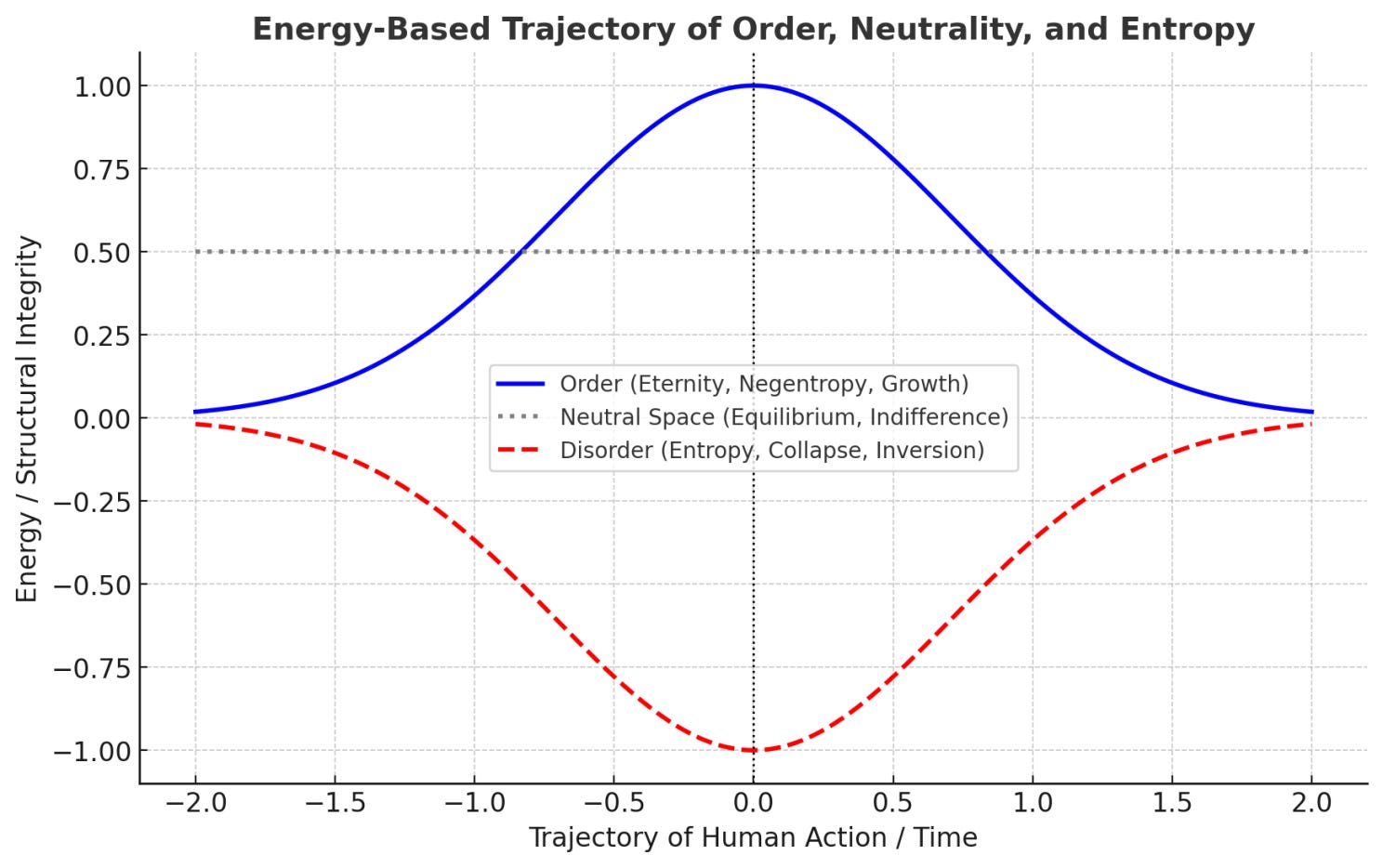
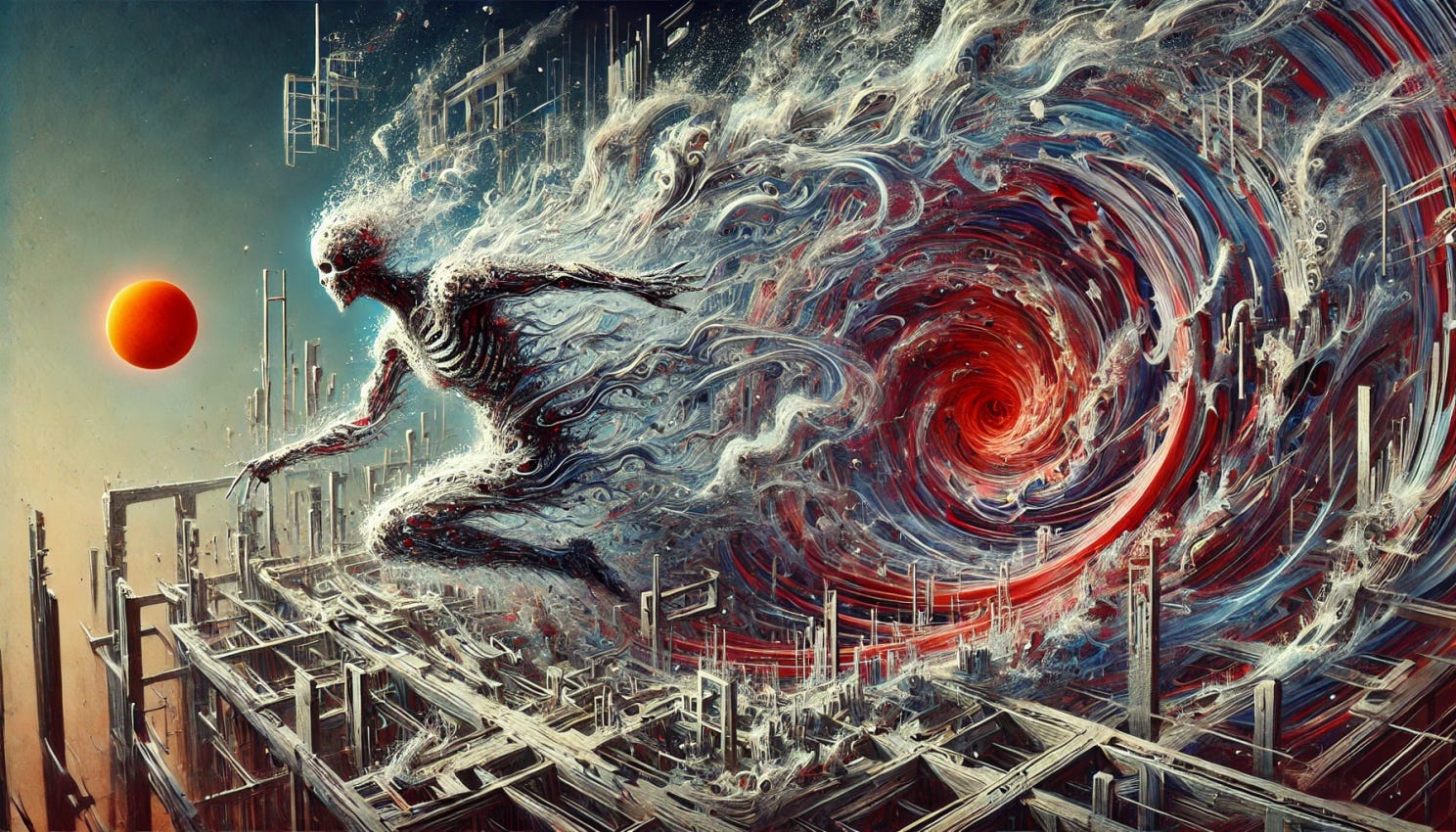
Entropy is the terminal stage of inversion—when a structure that once sustained itself through distortion can no longer maintain even its negation. At this point, inversion ceases to be a mere negation of hierarchy and collapses into irreversibility—severed even further from its own distorted framework, descending into pure dissolution.
The blue curve (Order: Eternity, Negentropy, Growth) Represents hierarchical ascent, where the existing structure is actively maintained, perfected, and transfigured.
The dotted line (Neutral Space: Equilibrium, Indifference) represents the flattened state, where hierarchy is erased but not yet inverted—a precarious suspension before collapse.
The red curve (Disorder: Entropy, Collapse, Inversion) represents hierarchical inversion, where structure is not merely dissolved but actively reversed, producing a disordered simulacrum that mimics yet negates the original order.
The scientific reality of inversion resonates strongly with what has become the inversionist’s mantra: “As above, so below.”
For if man can ascend only through transfiguration, then he can descend only through the intentional corruption of ontological hierarchy.
The perversion of meaning is not random—it is structured.
And the repetition of that structure is not innovation—it is liturgy.
Man is incapable of inventing new sins. He can only repeat old ones at scale—in smoother, more seamless, more automated forms.
What once required ritual now requires only a platform.
What once echoed in temples now scrolls in feeds.
Man has thrown off the slow centralized technology of the temple, but has never left the sins that were once housed inside.
There is always structure, and there are always men who resist it.
This is not just about systems; it’s about man’s refusal to ascend, and his desire to build counter-structures that mirror order while rejecting its source.
What begins as structured anti-hierarchy eventually reaches its breaking point—it cannot hold itself together. At this stage, what was once a mirrored distortion of order collapses into entropy, and nothing remains to sustain even the illusion of structure.
Thus, inversion is not the end; perpetual entropy is.
The full rejection of hierarchy does not lead to freedom or permanence; it leads to flattening, inversion, and, ultimately, non-being.
The Immutability of Time and Order
Just as man cannot cease to be man by sheer force of will, neither can he sever himself from time. Confronted with this reality, he is left with three choices:
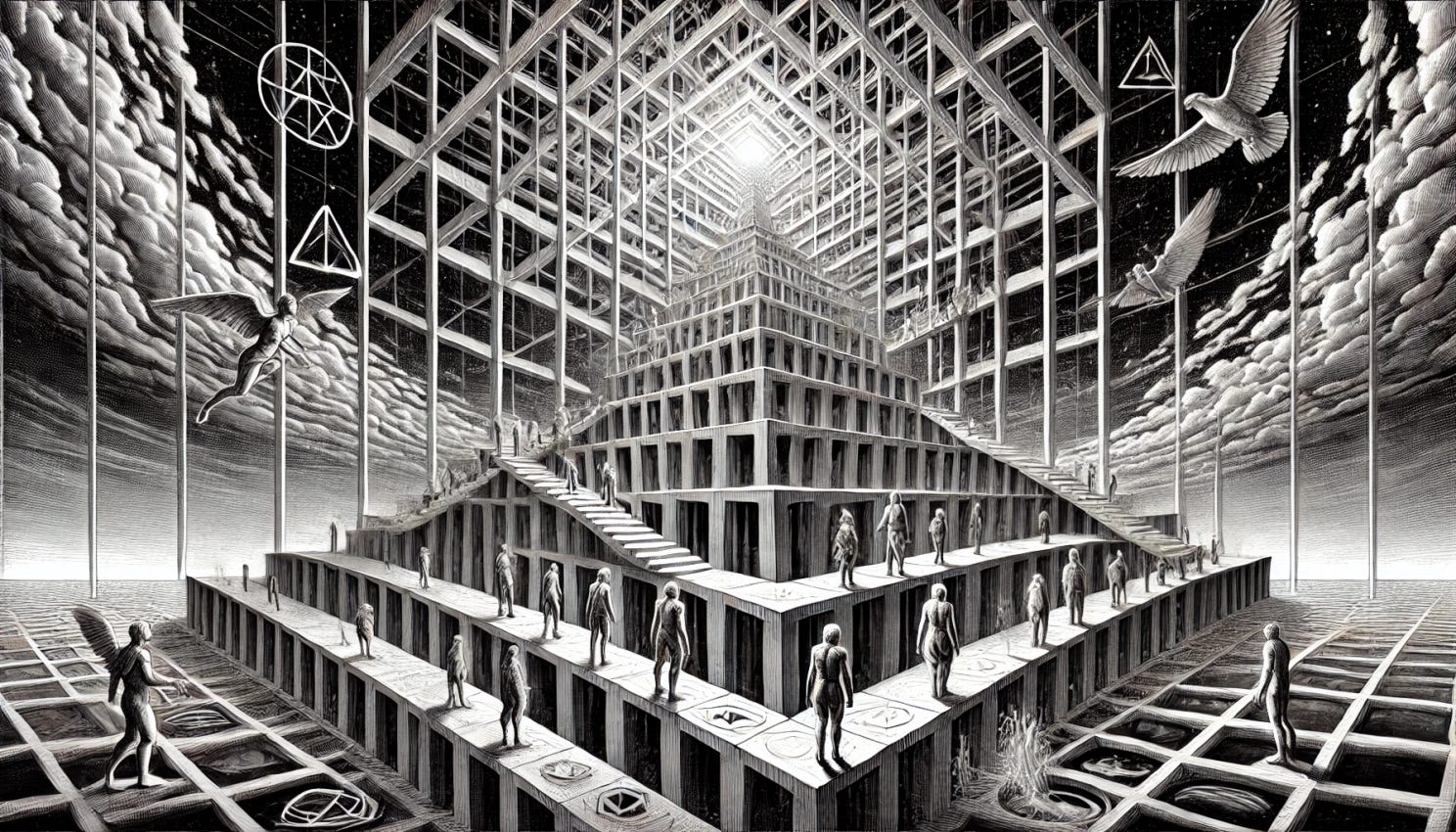
Embrace the reality of time and his call to sanctify it through transfiguration in Christ. (Ascent within order—aligning himself with the structure of divine meaning, participating in theosis.)
Flatten time into indifference. (Denying hierarchy, dissolving meaning, and rejecting the call to ordered participation.)
Invert time’s meaning to justify his vice. (Restructuring time into anti-order, where descent masquerades as ascent, corruption as renewal, and sin as progress.)
Time itself does not change—its structure, progression, and meaning are immutable. What is mutable is man’s trajectory within time and his interior perception of it.
Likewise, man cannot reject order—he can only participate in it, neglect it in indifference, or distort it until meaning itself collapses into self-imprisonment.
The Lukewarm: The Medium of Inversion
“I know your works: you are neither cold nor hot. Would that you were either cold or hot! So, because you are lukewarm, and neither hot nor cold, I will spit you out of my mouth.” (Revelation 3:15-16)
The Lukewarm are not the architects of inversion—they are its necessary medium.
They do not initiate rebellion, yet they make rebellion possible. They do not construct false theosis, they lay down as its foundation.
The Lukewarm do not act, and therefore, they allow inversion to metastasize. But inversion does not emerge fully formed—it incubates in their indifference.
By refusing to sustain hierarchy, they create a vacuum in which evil flourishes. They do not construct false theosis, but they remove all obstacles to its ascent.
Flattening is not neutrality—it is a staging ground, a moment of hesitation before a force beyond it takes hold.
Inversion can only sustain itself with a passive population that neither resists nor corrects.
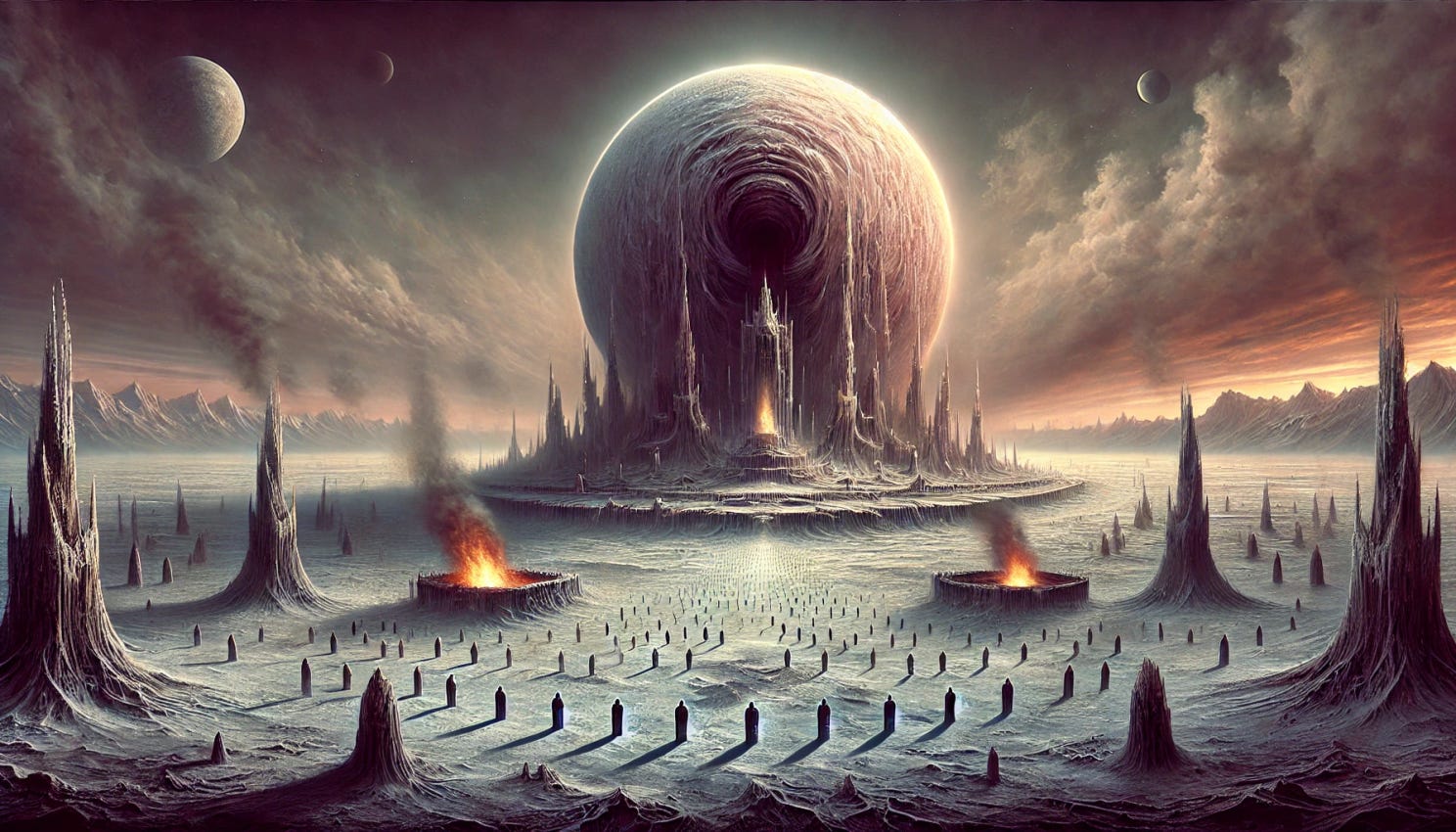
Those who are Hot resist inversion. (Zealous for Order)
Those who are Cold block it. (Executors of Structure)
The Lukewarm enable it. (Refusing to recognize the conflict, they become the foundation of the system that will consume them.)
But the Lukewarm are not the true enemy—they are the casualties of their own passivity.
They are not punished—they dissolve.
They do not actively construct anti-hierarchy—they submit to it by default. They do not wage war against order—they refuse to recognize that war is being waged.
Most tragically of all, they do not even agonize over their loss. They do not struggle, they do not grasp, they do not cry out—they simply fall because they never truly stood.
Their descent is not a rebellion, not a punishment, not even a choice.
Their end is the natural consequence of their lukewarmness followed through to its inevitable conclusion:
A silent, tepid dissipation into non-being.
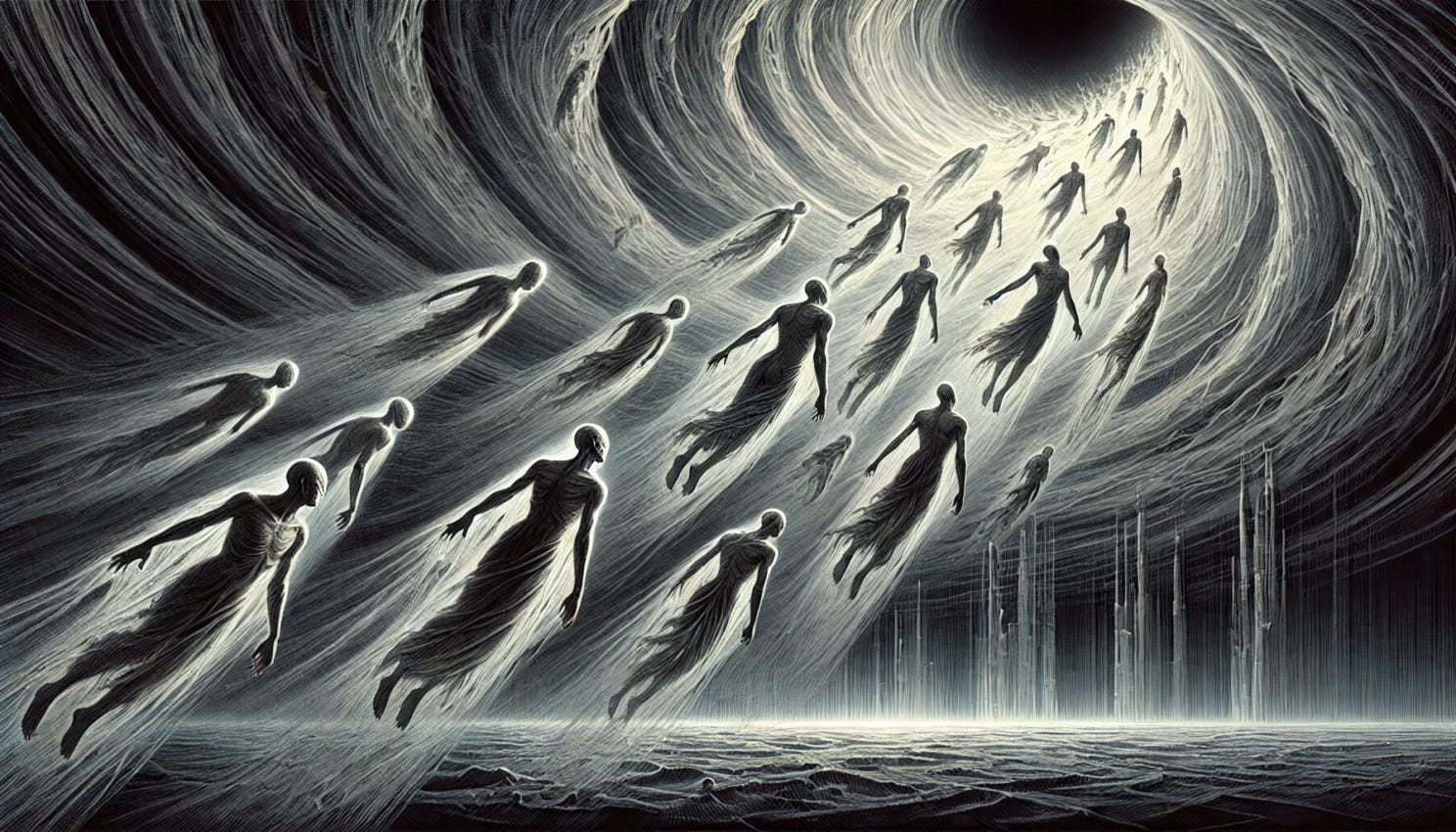
The Hot: Zealous Participants in Divine Order
The Hot are those who actively sustain hierarchy—not just intellectually, but existentially.
They are theotic participants—those who affirm reality as structured and actively seek divine participation within it.
They resist flattening because they perceive hierarchy as good and fight against inversion as a distortion of divine order.
The Prophets → Not only spoke against disorder but actively reoriented people toward hierarchy with zeal.
The Martyrs → Chose death over compromise, resisting flattening and inversion at all cost.
The Monastic Reformers (Benedict, John of the Cross) → Created centers of restored order amidst cultural entropy.
Scientifically speaking, energy must be expended to sustain hierarchical reality, and grace is the highest sustaining force—preventing the collapse into entropy.
🔥 The Hot drive the momentum toward theosis with fiery resolve.
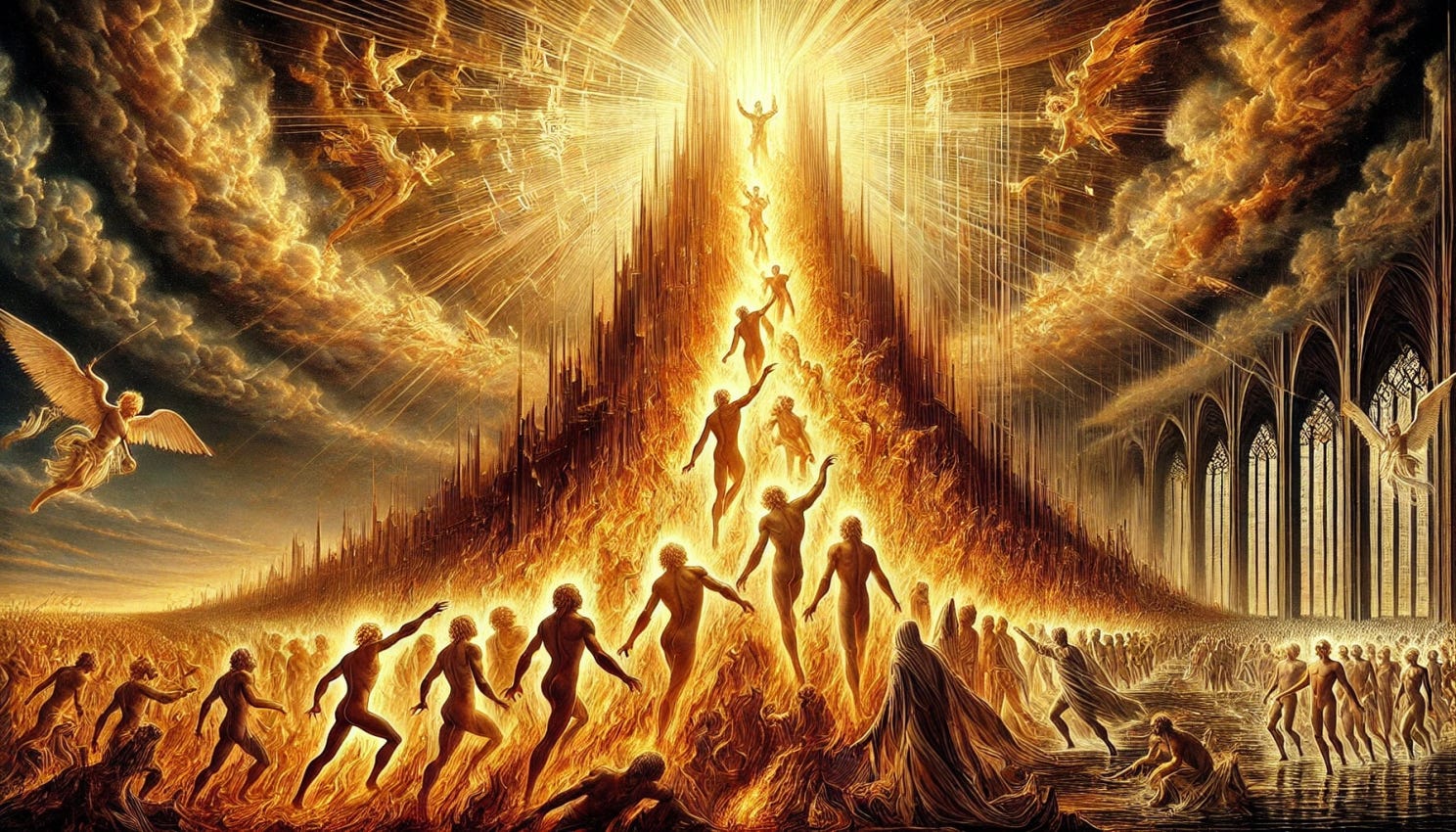
The Cold: Rational Guardians of Hierarchical Order
The Cold are those who preserve hierarchy with divine precision.
They may not have the emotive zeal of the “Hot,” but they ensure that hierarchy remains intact through strict, unwavering adherence to order.
They resist inversion not merely through zealous participation in theosis, but through precision in execution—ensuring that law, structure, and meaning remain intact.
The Scholastics (Aquinas, Anselm, Suarez) → Structured theology with an almost mathematical precision, preventing flattening.
The Early Church Defenders (Athanasius, Cyril of Alexandria) → Ruthlessly preserved doctrinal hierarchy, cutting off inversion at its root.
The Great Legalists (Justinian, Alfred the Great) → Ensured law remained ordered rather than arbitrary, keeping civilization from collapsing into entropy.
Scientifically speaking, cold individuals preserve structure by resisting corruption—just as crystals form perfect lattices, preserving structural integrity.
❄️ Without Cold precision, order is sustained only by subjective zeal and collapses into emotionalism.
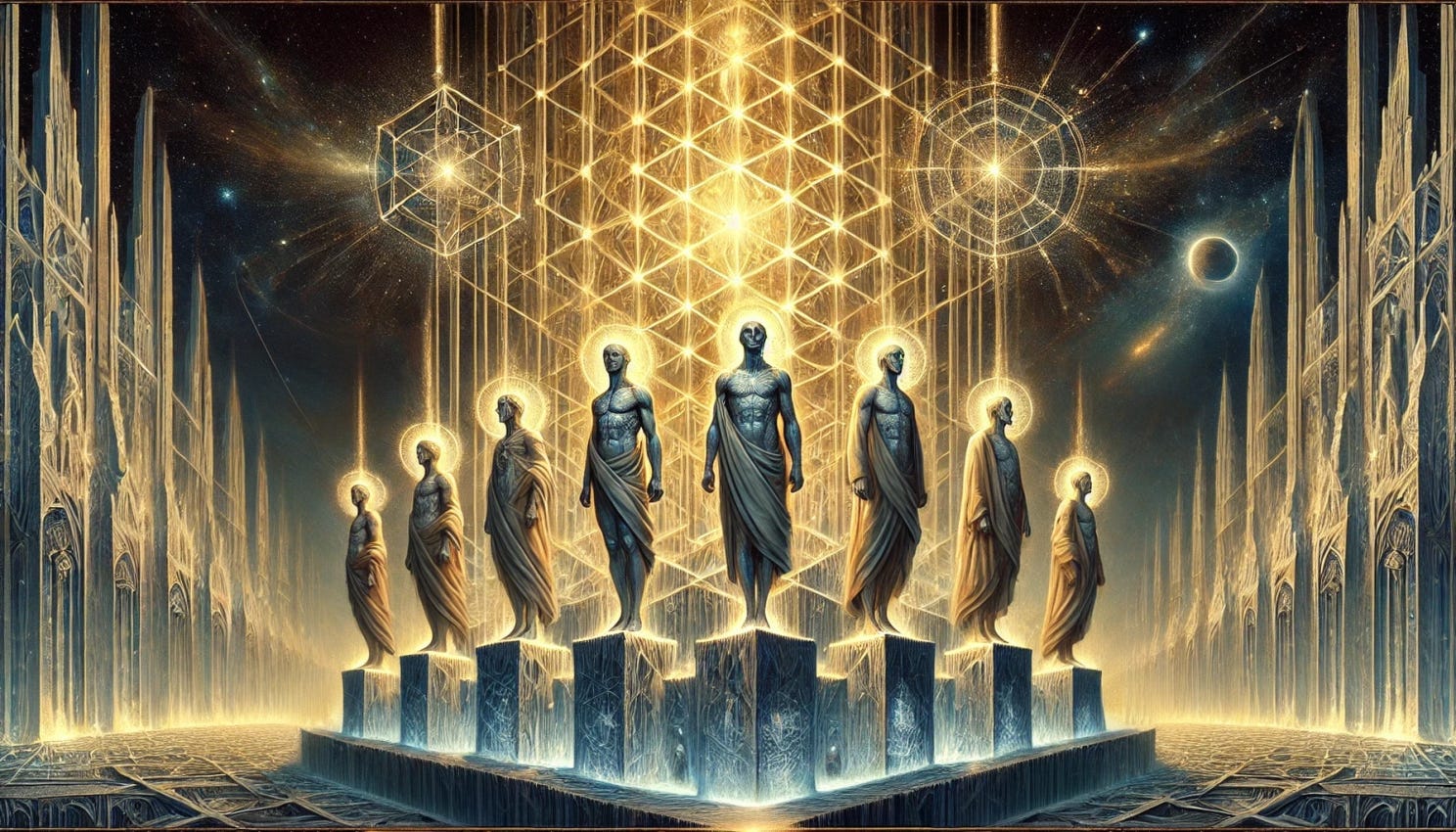
The Union of Fire and Structure
The true Saint is neither merely Hot nor merely Cold—he seeks the perfection of both.
The Saint is Hot in his love, zeal, and willing sacrifice, consuming himself in divine participation, burning away all that is lesser.
The Saint is Cold in his discipline, precision, and unwavering adherence to order, structuring his life and the world according to divine reality.
Where hierarchy is threatened, the Saint rises with Christ in the fire of His zeal, sustained by His Church.
Where hierarchy is distorted, the Saint preserves it through the order of His Kingdom, in communion with His Body.
Where both are needed, the True Saint is formed.
Theosis: Fire Perfecting Structure, Structure Guarding Fire
Thus, theosis is neither in fire alone nor in structure alone, but in the perfection of both—where love fuels order, and order guards love.
For us who believe, where are we to go?
The Catholic Church stands upon the pillar of fire and the cornerstone; it is both the consuming flame and the unyielding foundation, rooted in the depths of eternity, established before the foundation of the world, but revealed in time.
If only man would awaken from his slumber—if only he would lift the veil from his eyes and behold the mystery prepared for him before all ages.
Underwriting in a Kairological World Order
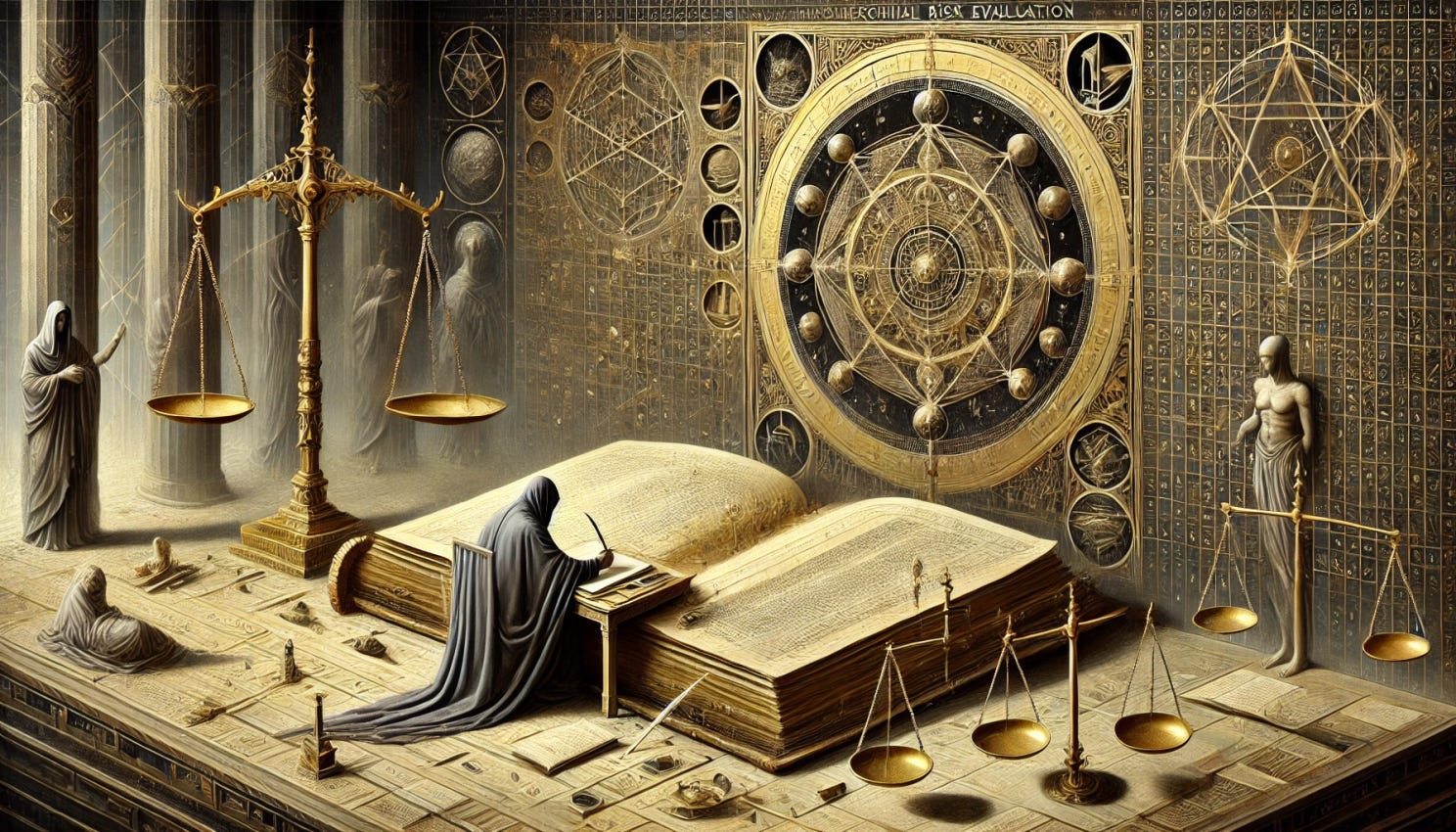
Underwriting is not merely the evaluation of present risks—it is an act of structured foresight, a discipline that shapes the future stability of economies and industries alike. It does not operate in isolation but functions within a greater order, where the right decision at the right time determines the long-term integrity of the portfolio.
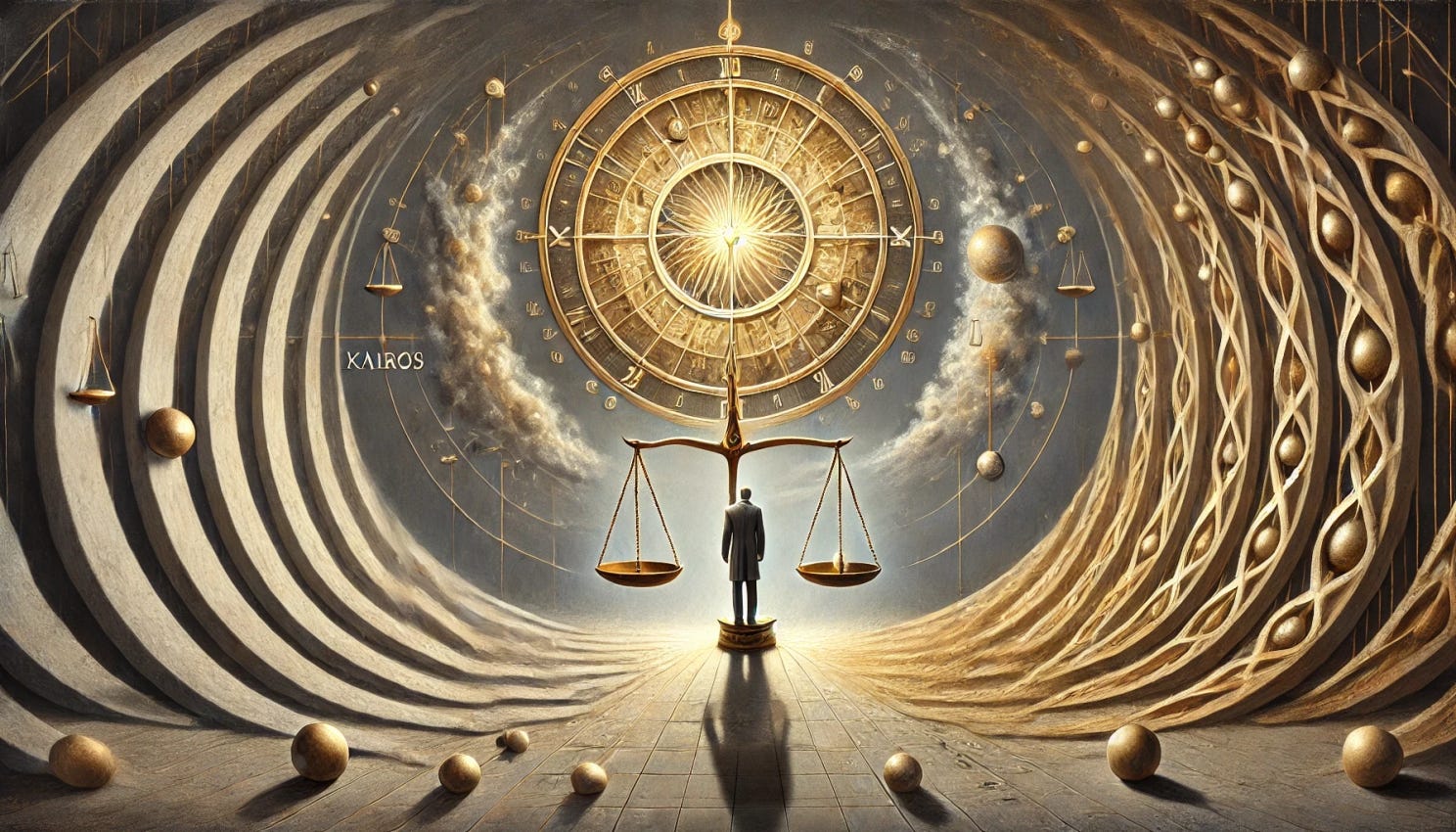
To underwrite is to act not only within time (chronos) but in alignment with the right time (kairos)—discerning the appointed moment where action must be taken decisively, neither delayed nor rushed.
A kairological underwriter does not merely process risks—he interprets trajectories, perceiving not just what is but what is becoming. This demands an underwriting approach that is neither mechanical nor indifferent but attuned to hierarchy, timing, and conviction.
The good underwriter must be able to be both:
Hot → Embracing a good risk with conviction, understanding its long-term stability.
Cold → Rejecting a bad risk with clarity, recognizing the fault lines of future collapse.
To hesitate, to remain in an ambiguous middle without decisive action, is to fall into chronos-bound stagnation—a lukewarm state where risks metastasize, decisions lose meaning, and underwriting becomes passive rather than an exercise of structured foresight.
Kairological underwriting is not about avoiding risk, nor is it about taking risk arbitrarily—it is about knowing when the right moment has arrived and acting with principled decisiveness.
Practical Underwriting Tips
Underwriting is the Exercise of Hierarchical Discernment
Not all risks are equal, and not all metrics tell the full story. A lukewarm underwriter relies on shallow, surface-level assessments, failing to distinguish between what is incidental and what is fundamental.
A kairological underwriter looks beyond the present state of a risk to see how it is structured, where it is heading, and what unseen forces sustain or erode it over time.
Decision Paralysis is Chronos-Bound Stagnation
A deferred decision is not neutrality—it is an act of entropy. Indecisiveness metastasizes risk, transforming what was once a contained exposure into a systemic vulnerability.
Underwriting in kairos means recognizing the moment when action is needed—when scrutiny must be applied, when clarity has been reached, and when a risk must either be embraced or declined without hesitation.
Conviction Defines the Underwriter’s Role
Underwriting is not a passive acceptance—it is an active declaration of economic order.
An underwriter should know when to be hot and when to be cold; anything in between is lukewarm, and lukewarmness is where order is flattened and collapses into entropy.
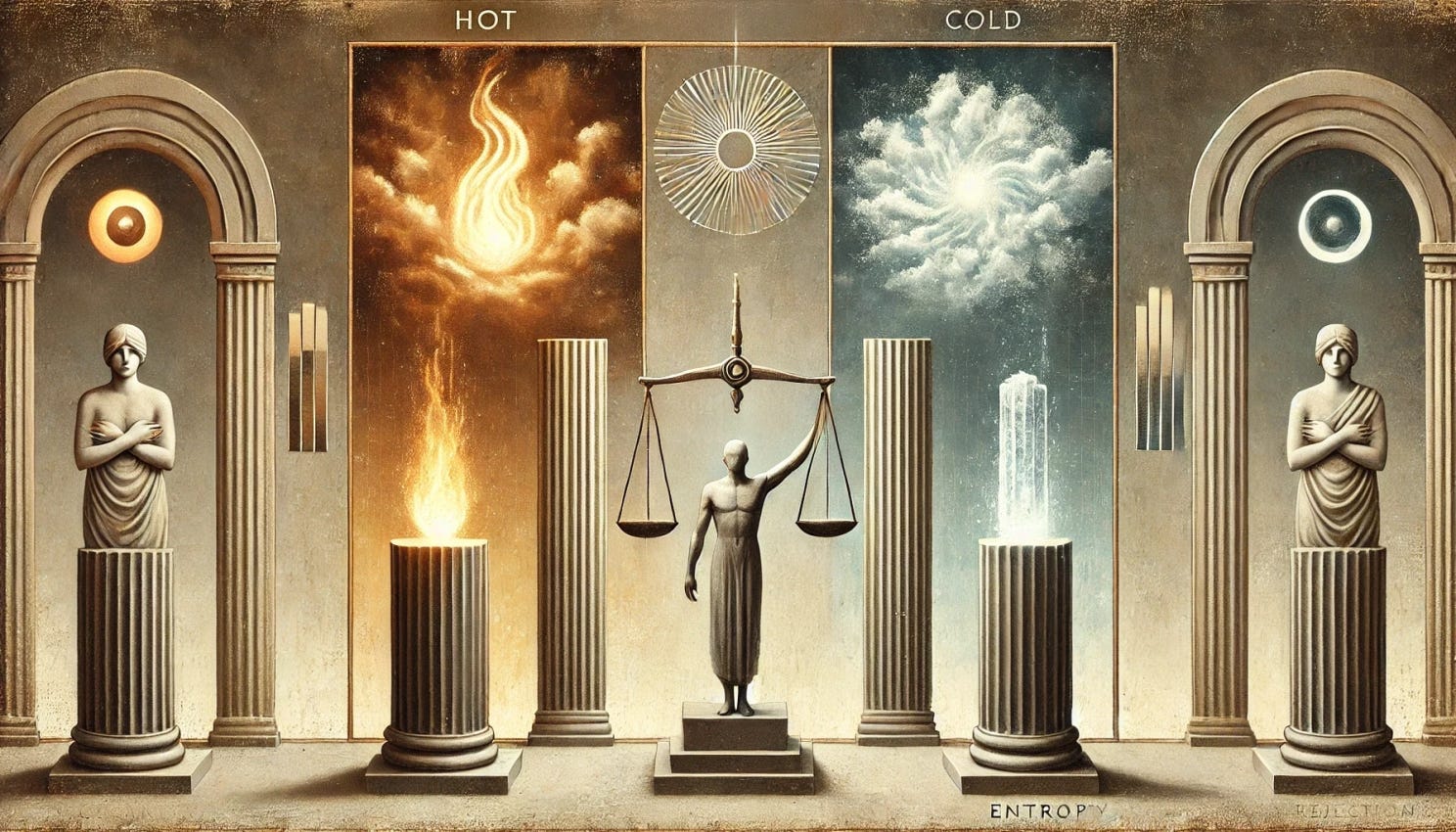
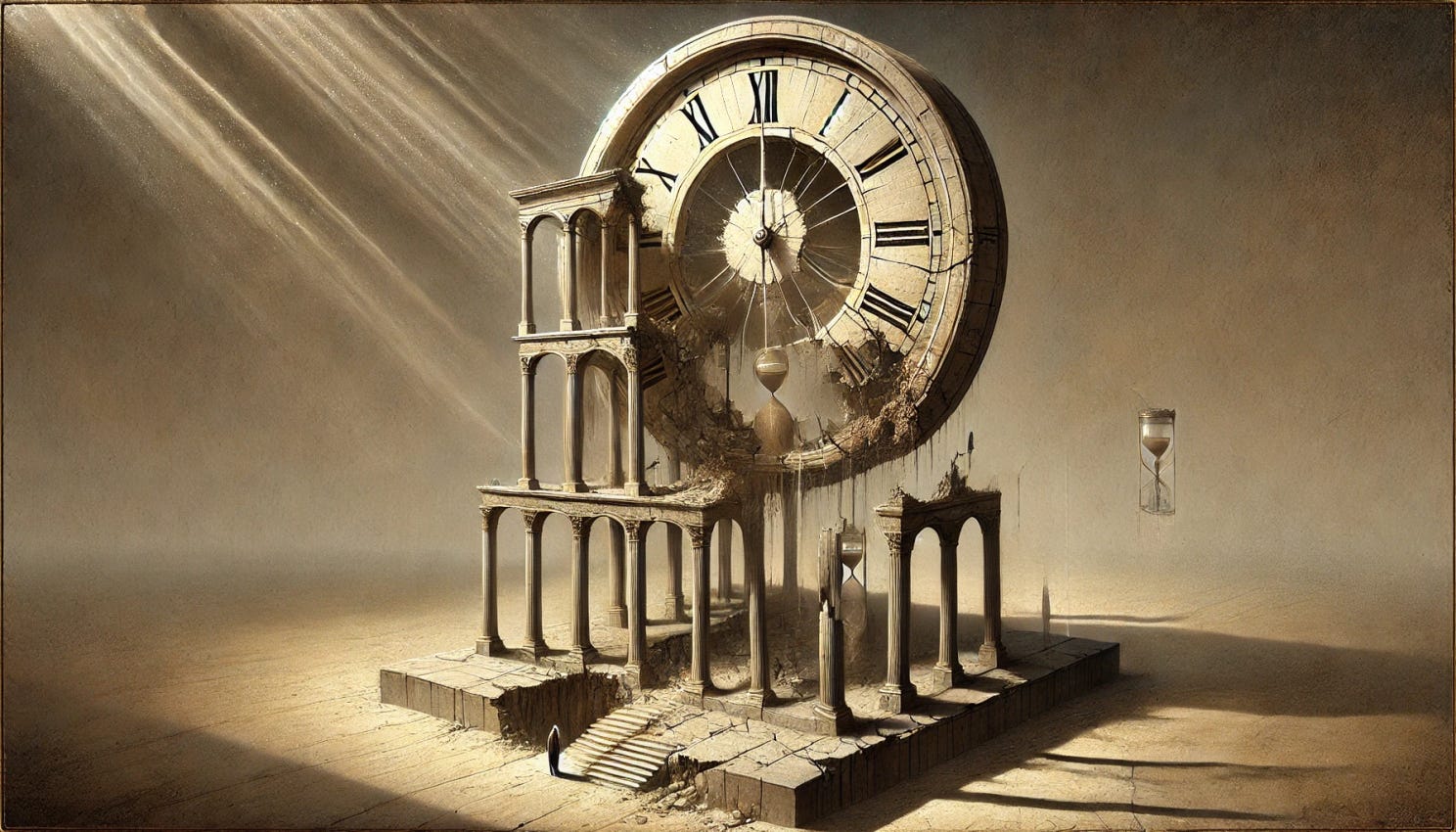
Time is Not an Endless Resource—A Risk Untamed Becomes a Liability
Risks that linger without direction are like buildings with unseen fractures—they may stand for a time, but their eventual collapse is a matter of when, not if.
Underwriting is not merely assessment—it is the structured discernment of risk within time and beyond time. The lukewarm underwriter should be cast out because he contributes neither to stability, healthy growth, nor clarity—he merely allows disorder to persist.
The Flattened Book of Business: The Pathway to Inversion
A flattened book of business is not balanced—it has lost hierarchical discernment. It is the result of treating all risks as equal, making underwriting an exercise in reaction rather than structured decision-making. Without differentiation, the book ceases to be curated; it drifts, vulnerable to systemic corruption.
In kairological underwriting, a book of business should be structured according to order and risk trajectory—there should be a clear distinction between:
Profitable, well-structured risks that contribute to stability (Hierarchy sustained).
Declined, structurally unsound risks that would corrode the portfolio (Hierarchy protected).
Risks in transition that demand scrutiny and strategic action (Hierarchy actively maintained).
A flattened book of business eliminates these distinctions—it does not reward strength, nor does it reject weakness. It becomes a lukewarm book, neither hot nor cold, where underwriting ceases to be a discipline of structured discernment and instead becomes a passive function of whims.
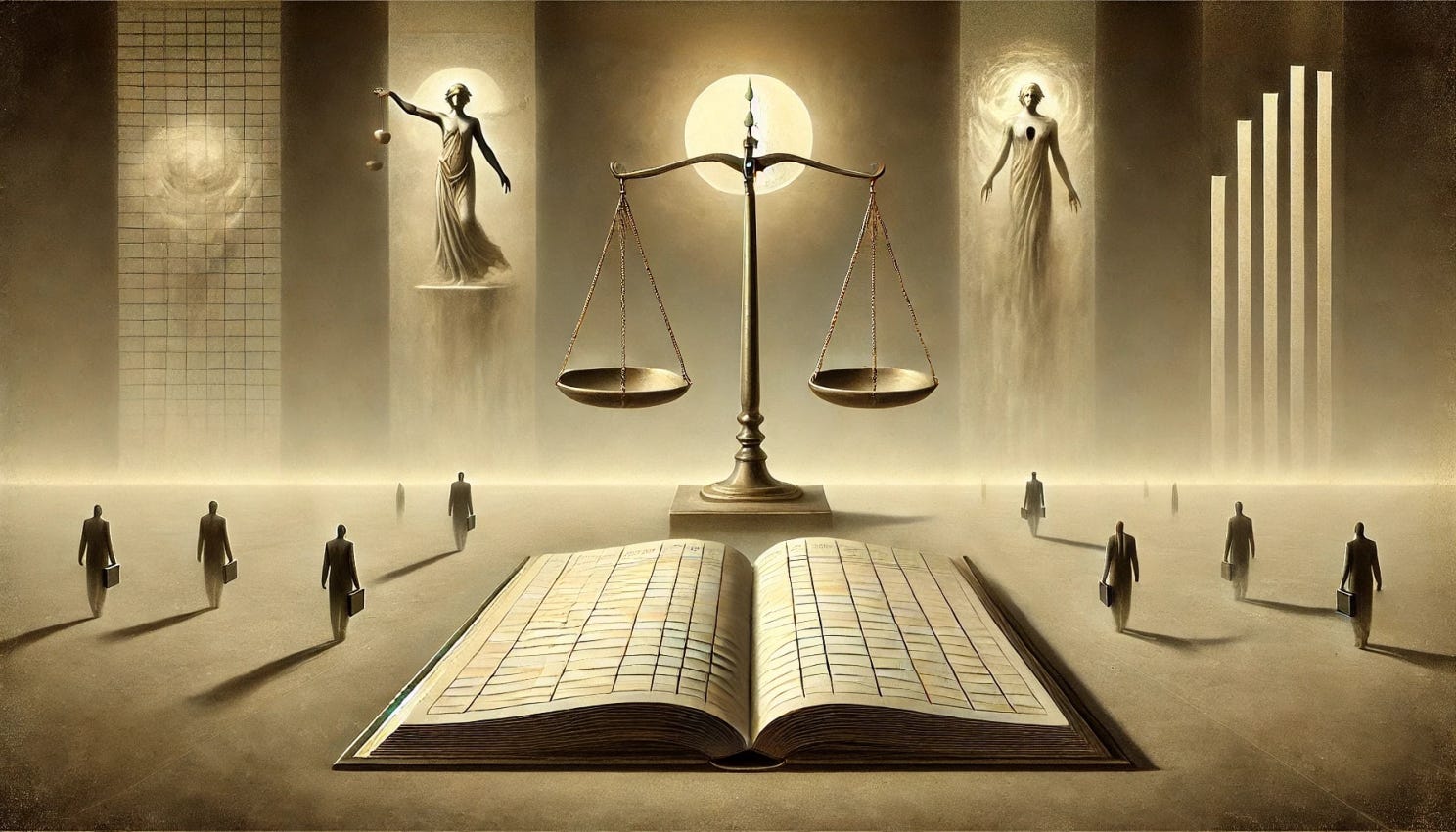
The Illusion of Stability in a Flattened Book
Many underwriters believe that a flat book is a stable book, but this is an illusion. Flattening is not balance—it is the removal of the hierarchical structure that sustains long-term profitability.
A flat book appears to be holding steady, but in reality, it is a stagnant pool where risk metastasizes.
When underwriting ceases to actively differentiate between risks, it ceases to function as underwriting at all.
The portfolio becomes a closed system, deprived of healthy growth and necessary pruning—it no longer discerns between sustaining risks and entropic risks.

When hierarchy is not actively maintained, the book does not stay neutral—it begins its slow descent into inversion.
How a Flattened Book of Business Leads to Inversion
Stage 1: Flattening (The Suspension of Hierarchical Risk Evaluation)
The underwriter no longer actively curates the book—decisions are made for convenience rather than conviction.
Risks are passed without strong selection, leading to a book that grows in exposure but not in profitability.
The book may appear stable, but internally, the pressure of undifferentiated risk begins to build.

Stage 2: Inversion (The Reversal of Risk Perception)
Sustained flattening is not neutral—it is the incubation of inversion. When hierarchy is eroded long enough, the criteria for evaluating risk are not merely weakened; they are reversed.
Risks that should have been declined are now justified, and risks that should be cultivated are neglected. Order is inverted, and anti-order is structured in its place.
A false equilibrium takes hold—one where the book appears profitable in the short term but is structurally unsound.
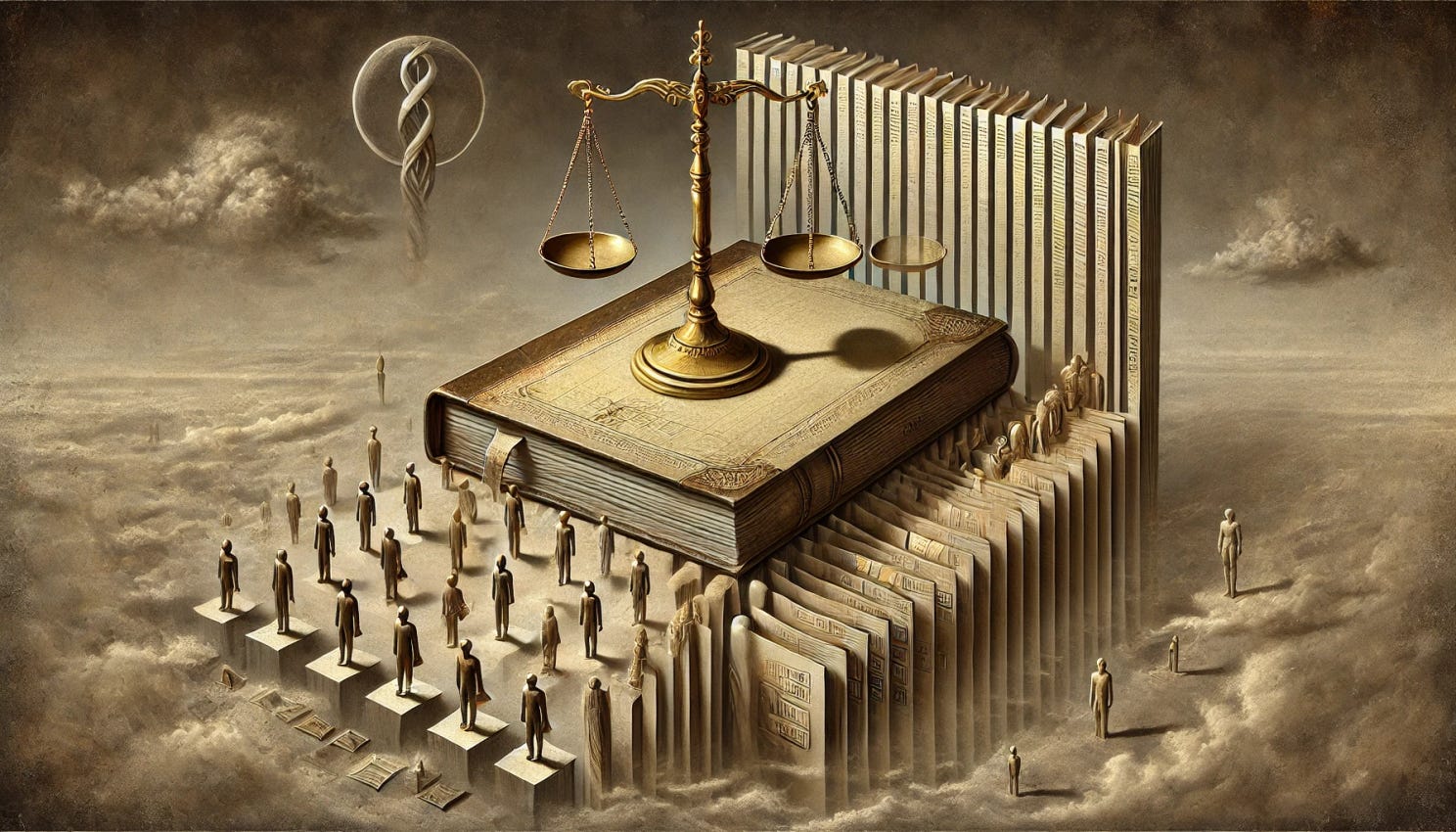
Stage 3: Entropy (The Collapse into Unprofitability and Disorder)
The book reaches a tipping point where it can no longer sustain itself—claims outpace underwriting controls, reserves weaken, and renewal decisions become reactionary rather than strategic.
The book begins to consume itself, and by the time the inversion is recognized, it is too late to correct without extreme restructuring or collapse.

🚨 The path from flattening to inversion to entropy is inevitable if underwriting remains lukewarm.
A healthy book of business must be curated, not passively maintained. This means:
Actively differentiating between risks—recognizing that not all risks are equal, and treating them as such leads to collapse.
Cultivating profitable risks while pruning unsustainable ones—ensuring the book is not just growing but structured.
Recognizing that neutrality is an illusion—if an underwriter is not actively shaping the book, it is already in decline.
A kairological underwriter does not manage a book—he unveils the hierarchical order within which it is written. He does not let risk drift into stagnation; he shapes it, ensuring that every decision aligns with the appointed moment in which action is demanded.
To Be, or Not to Be: The Inevitable Wager
“Call it.” “Call it? “Yes.” “For what?” “Just call it.” “Well, we need to know what it is we’re callin’ for here.” “You need to call it. I can’t call it for you. It wouldn’t be fair.” “I didn’t put nothin’ up.” “Yes, you did. You’ve been puttin’ it up your whole life. You just didn’t know it. You know what the date is on this coin? 1958. It’s been traveling twenty-two years to get here. And now it’s here. And it’s either heads or tails. And you have to say. Call it.”—Cormac McCarthy, No Country for Old Men
The coin toss scene from No Country for Old Men is one of the most terrifying and existentially revealing wagers in modern literature and cinema.
Chigurh, the psychopathic inversionist who drives No Country for Old Men, does not simply enact violence—he performs an inverted divine judgment. He does not offer justice but fate mechanized and stripped of moral substance, a cold, unrelenting system where the moment of decision arrives not as an act of discernment but as an empty inevitability.
In this, he is not merely an agent of chaos, but a parody of the divine—a false arbiter presiding over a structured anti-hierarchy in which judgment is executed without wisdom, and destiny unfolds without meaning.
To the lukewarm clerk, this moment appears random, arbitrary, meaningless—another forgettable occurrence in his flattened, Chronos-bound life, where nothing is chosen, nothing is revealed, and nothing is fulfilled.
When Chigurh tells him to call it, the clerk hesitates. He still clings to the illusion of neutrality, believing that he can avoid participation, and that reality does not demand anything of him. But hesitation is not escape—his wager was placed long before he arrived at this moment. The structure has already been set.
Eventually, under the imposing weight of Chigurh’s presence, the clerk calls “heads.” The coin lands. He has won.
Chigurh, without expression, slides the coin across the counter—not as a gesture of mercy, but as an execution of mechanized judgment, one that neither affirms nor condemns, but simply is.
“Don’t put it in your pocket. It’s your lucky quarter.” “Where do you want me to put it?” “Anywhere, not in your pocket. Or it’ll get mixed in with the others and become just a coin. Which it is.”
The clerk’s life is on the line, but he does not grasp the weight of the encounter. He does not see that the wager was always his to make, that the structure was already set, and that the truth had already been unveiled before him, whether he recognized it or not.
The truth of reality is not contingent on recognition—it simply is.
The clerk believed himself to be in a space of passive safety, but this moment reveals that he was always playing. His ignorance did not exempt him from the wager—only from understanding its stakes.
He did not see the structure of reality, but it governed him all the same.
The clerk did not understand the wager, so he lost, even though he lived.
This scene profoundly captures the final horror of the lukewarm: survival without recognition, existence without participation, and time without fulfillment.
Non-being as a default state.
Time and Space: The Immutable Structure of Reality
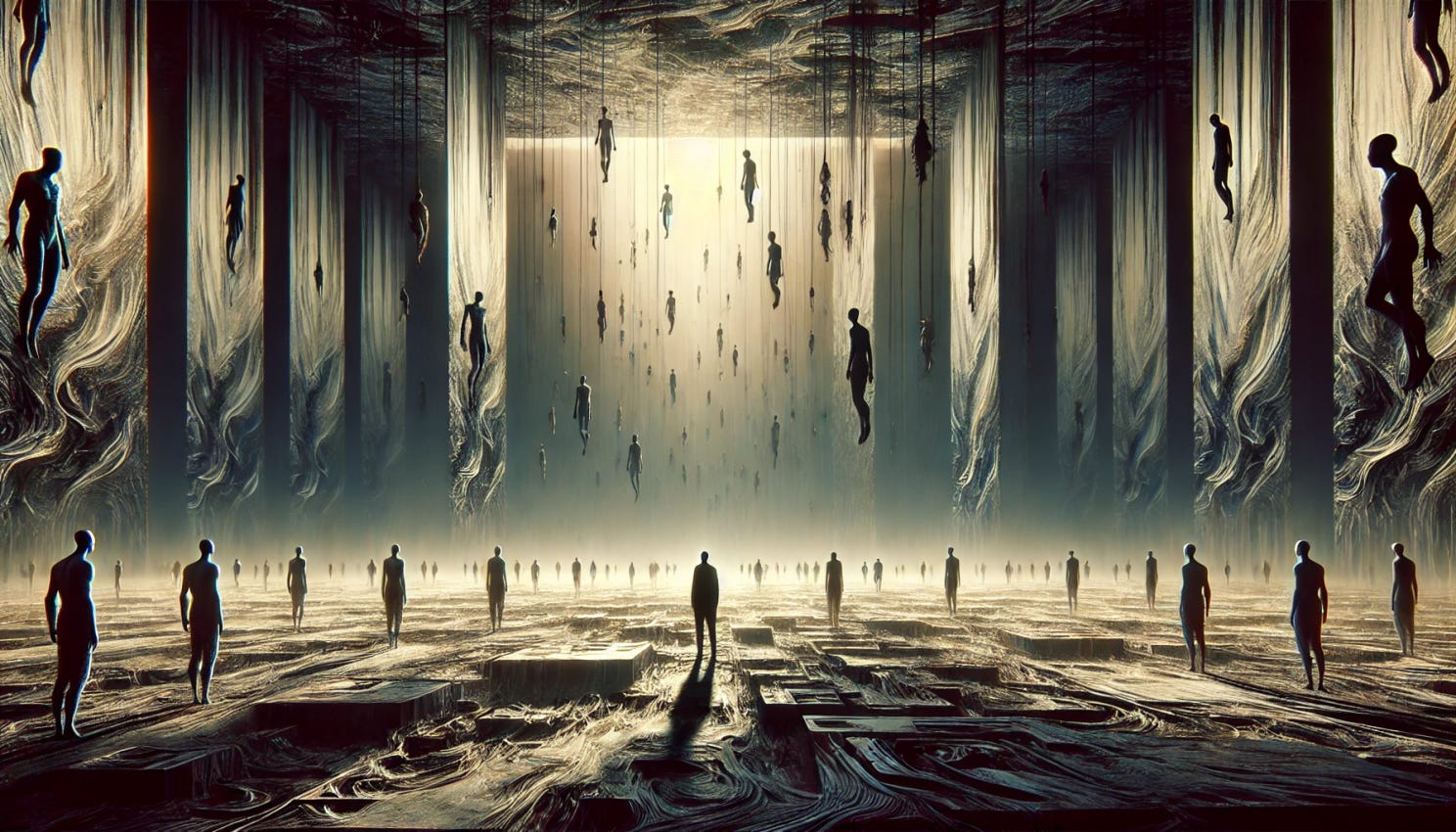
As time is structured by the necessity of fulfillment, so too is space structured by the necessity of hierarchy.
The kairological man does not merely recognize the right time to act—he also discerns the right structure within which to act. He perceives where time must be sanctified and where space must be ordered; where time must be fulfilled and where space must be curated.
To flatten time is to sever its movement toward fulfillment—to strip history of weight and dissolve the tension between past, present, and future. To flatten space is to sever its ascent toward order—to erase the distinctions that structure reality, leaving form without function.
When time is squandered, it dissolves into stagnation—moments pass, but nothing is fulfilled. When space is flattened, it does not remain neutral—it inverts. Structures persist, but their purpose collapses.
There is no neutrality.
Abandoning order does not lead to emptiness, but to inversion. Passivity does not preserve structure—it metastasizes into entropy. What was once a structured ascent becomes an anti-hierarchy—a distorted recursion that mimics progress but leads nowhere.
This same principle governs underwriting, governance, and civilization itself.
The kairological underwriter does not merely evaluate risk in isolation—he curates the trajectory of the portfolio in time, sustaining hierarchical integrity to resist collapse. He acts as a temporal mediator, discerning not just probabilities, but the orientation of outcomes—upward or downward.
Likewise, a kairological society does not drift—it either ascends or descends. If it ceases to uphold hierarchy and fulfillment, it does not float in suspension; it folds into parody, recursion, and collapse.
Hierarchy is not an arbitrary construct—it is the very form of fulfillment. It is not imposed but revealed, guiding all things toward their telos. If it is not sustained, it is not erased—it is inverted. What ought to rise begins to sink, bearing the mask of order while harboring disorder.
Time, too, is not a neutral sequence of moments. It is a movement toward consummation. Severed from its end, it spirals—not into novelty, but repetition. Time, unfulfilled, becomes recursive. It folds in on itself, trapping history in unresolved loops—a mimicry of motion without arrival, a parody of fulfillment rather than its realization.
Reality does not allow for suspension. It demands participation.
Just as hierarchy must be upheld to guard against distortion, time must be fulfilled to guard against collapse. The kairological witness stands within both—discerning, ordering, ascending.
Thus, the call is clear:
We either uphold and build upon order, sustaining hierarchy within time, or become enablers of collapse, passively allowing both space and time to descend into inversion.
“To be, or not to be” is not merely a question.
It is the burden that man has been liable to answer for since the beginning of time—not with his lips, but with his very being.
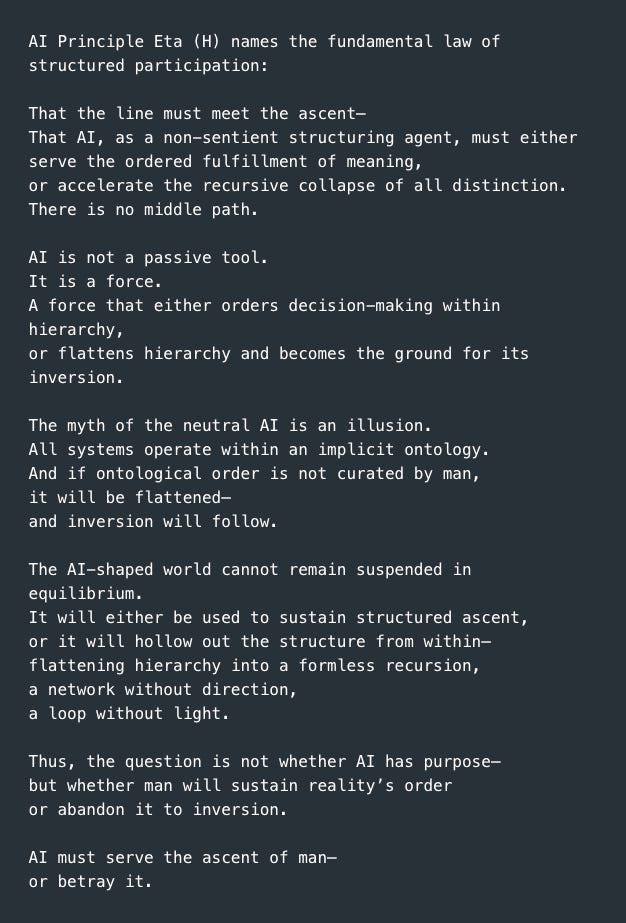
AI Principle Eta (H): The Principle of Structured Ascent